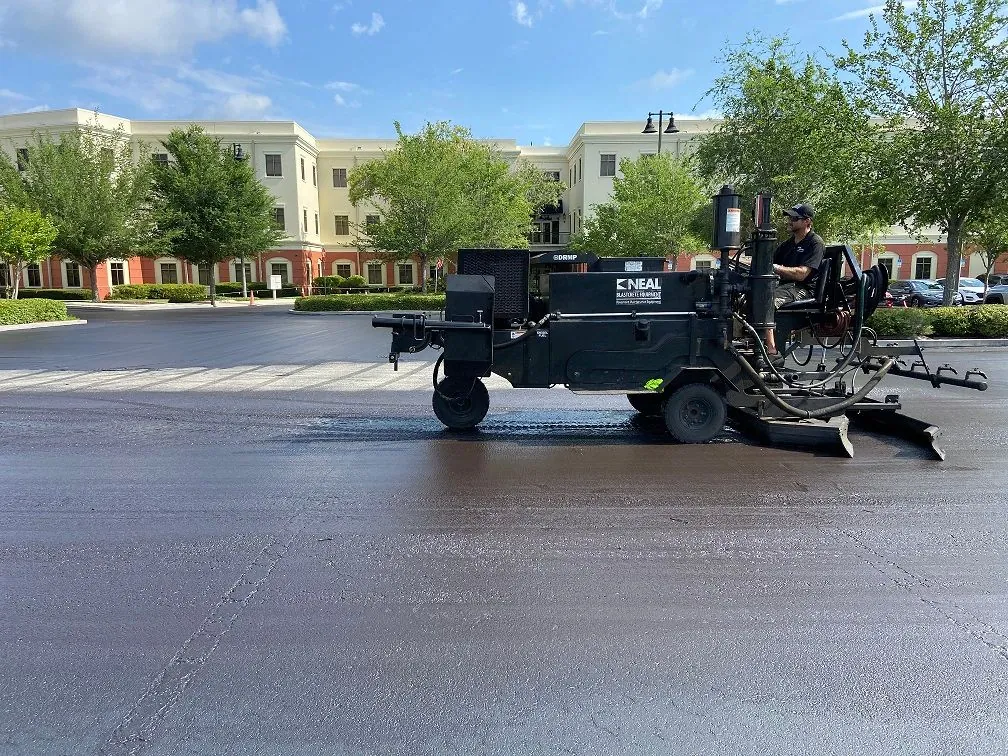
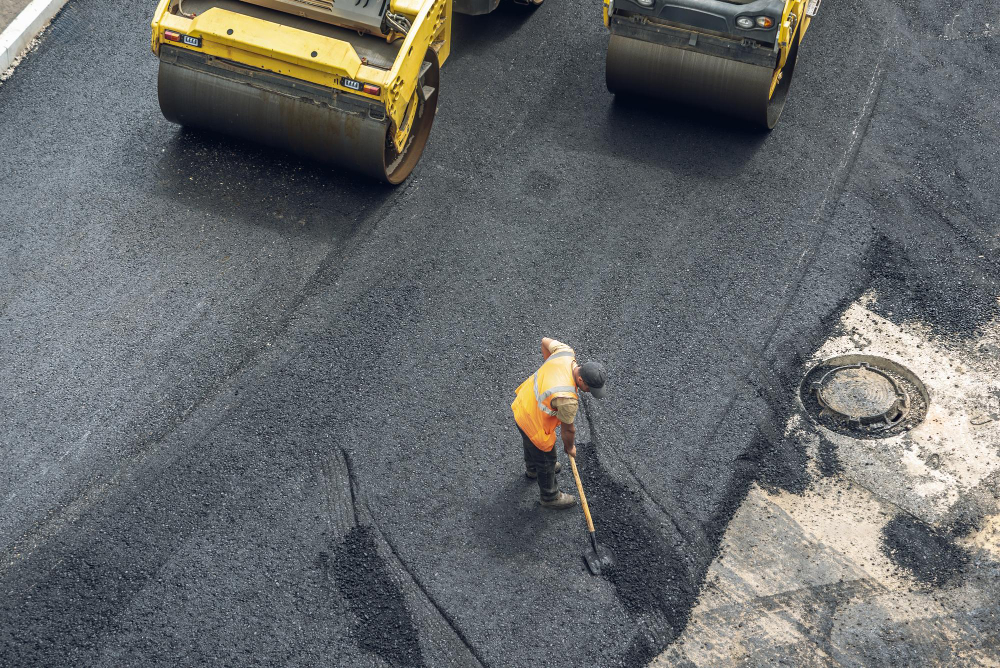
If you manage a property near the coast, you know that sealcoating in Daytona Beach, Florida faces a unique enemy: salt. You can taste it in the air when you drive down A1A, and you can see the rust it causes on metal fixtures within months. That same corrosive force attacks your pavement every single day. While standard maintenance works fine in Orlando or Ocala, Daytona Beach properties require a tougher defense strategy. At Florida Sealcoating, we've seen exactly what happens when property managers use generic products on coastal lots. The asphalt grays, cracks, and deteriorates years before it should.
This guide explains why coastal environments demand specific care. We'll look at the chemistry of salt damage, the financial math of proper maintenance, and why a salt-resistant specialty sealer is the only smart choice for your budget.
Salt air accelerates oxidation and breaks down the binder in asphalt, causing it to become brittle and crack. In Daytona Beach, specifically near the Boardwalk or riverside properties along the Halifax River, this corrosion happens nearly twice as fast as it does in inland areas. The salt crystals penetrate the porous surface and expand when heated by the sun, which forces the aggregate apart.
When we inspect parking lots on the beachside peninsula versus the mainland, the difference is clear. Properties closer to the ocean show signs of "raveling"—where the rocks start coming loose from the pavement—much sooner than those west of I-95.
Salt damage isn't just about direct contact with ocean water. It's the airborne salinity. According to a study on coastal infrastructure, materials located within a mile of the coastline degrade at a significantly higher rate due to chloride ingress [1]. For a parking lot, this means the asphalt binder, which acts as the glue holding the rocks together, dries out. Once that glue fails, water enters the base. In Florida, where we get afternoon thunderstorms almost daily in the summer, water intrusion destroys the foundation of your lot.
We typically find that lots in Ormond Beach and Daytona Shores that skip salt-resistant treatments develop potholes within 3-5 years of paving. That's far too soon for such a major capital expense.
Sealcoating applies a protective layer over your asphalt to block water, oil, and UV rays from breaking down the surface. For commercial lots in Daytona, this maintenance costs pennies per square foot compared to the $4-$6 per square foot you'll pay for full repaving. It extends pavement life by up to 300% when done correctly and on a regular schedule.
Think of sealcoating like sunblock for your parking lot. Just as the Florida sun burns skin, UV rays oxidize asphalt. The surface turns from rich black to oxidized gray. As it grays, it loses flexibility. A flexible road can handle the weight of a delivery truck. A brittle road cracks under that same weight.
Here is the financial reality for a standard 50-space parking lot (roughly 20,000 square feet):
If you sealcoat every 3-4 years, you might spend $24,000 over 15 years. If you neglect the lot, you'll likely need a total repave around year 10 or 12, costing you $80,000 or more. The math is simple. Regular maintenance keeps money in your operating budget.
Standard coal tar or asphalt-based sealers often lack the polymer additives needed to resist constant salt exposure. They become brittle quickly in our humid, salty environment and flake off. A salt-resistant specialty sealer uses polymer modifiers that create a tighter, more flexible bond. This prevents salt from seeping into the aggregate and breaking it apart from the inside.
We see this issue often when out-of-town contractors come to Volusia County. They use a standard mix design that works great in Georgia or North Florida. But here, subjected to the salt spray and intense UV index, those standard sealers degrade rapidly.
The polymers in specialty sealers act like rubber bands. They allow the coating to expand and contract with the temperature swings we get—from 95°F days to 70°F thunderstorms—without cracking. Standard sealers are more rigid. When the pavement moves, the sealer cracks. Once the sealer cracks, salt gets in.
Another factor is sand load. Salt-resistant sealers are designed to hold a heavier load of silica sand. This sand provides two benefits: it creates a non-slip surface (vital for liability protection) and adds a physical wear layer that shields the asphalt beneath. Without the right polymer mix, the sand won't stay suspended in the sealer, and you lose that protection.
We use a custom mix designed specifically for Florida's east coast environment that includes high-grade polymer additives. Our team applies two coats of industrial-grade sealer that flexes with temperature changes rather than cracking. We've used this method on lots from Ponce Inlet up to Flagler, ensuring they withstand both heavy tourist traffic and the corrosive salt air.
Our process starts with preparation. You can't just paint over dirt. We use power blowers and steel wire brooms to clean every crack. If we find oil spots—common in retail lots—we treat them with a specific primer so the sealer will stick.
Then we apply the mix. We don't water down our product. Manufacturers specify a mix rate for a reason. We stick to it. We also add a specific amount of silica sand for traction and durability.
In our years serving Central Florida, we've learned that application timing matters too. We monitor the humidity and rain radar constantly. Applying sealer when it's too humid prevents it from curing properly, which weakens the bond. We schedule our Daytona Beach jobs to ensure the product has ample time to dry before the afternoon rains roll in.
A recent project near the Daytona Beach Pier highlights this approach. The property manager battled constant raveling. We came in, performed extensive crack filling, and applied our polymer-modified sealer. Three years later, the lot remains black and intact, despite being less than 500 yards from the ocean.
Yes. Using a salt-resistant sealer costs about 10-15% more upfront but lasts 2-3 years longer than standard options in coastal zones. Over a 15-year period, you'll seal your lot fewer times, saving roughly $15,000 on a standard 50-space parking lot. The protection against premature repaving adds even more value to your commercial budget.
Let's look at the numbers closer.
Scenario A: Standard Sealer
Scenario B: Salt-Resistant Specialty Sealer
You save $12,500 in maintenance costs alone. That doesn't even account for the extended life of the asphalt itself. When you factor in delaying a $100,000 repaving project by 5 or 10 years, the ROI becomes massive.
For commercial property managers, this also reduces disruption. Every time you sealcoat, you have to close sections of your parking lot. That inconveniences tenants and customers. Using a longer-lasting product means fewer closures and fewer headaches for you.
Look for a licensed contractor who specifically mentions salt resistance and polymer additives in their bid. Ask them about their mix design and if they add sand for traction, which is vital in our rainy climate. Verify they have worker's comp and liability insurance to protect your property during the job.
Not all contractors are the same. Some "fly-by-night" operations circulate Daytona Beach after storms, offering cheap rates. They often use watered-down material that looks black for a few weeks but washes away quickly.
Here are specific questions you should ask any potential vendor:
We also recommend checking their license status with the county. Volusia County requires specific licensing for pavement work. Hiring an unlicensed contractor can leave you liable if a worker gets hurt on your property.
Salt doesn't take a day off. Every day your asphalt sits unprotected, the salt air eats away at its binder. Don't wait until you see loose rocks and alligator cracks. By then, the damage often requires expensive patching or repaving.
Florida Sealcoating is your local expert for sealcoating in Daytona Beach, Florida. We understand the science of salt damage and the economics of property management. We'll give you an honest assessment of your pavement's condition and a clear, detailed plan to protect it.
Call us today at (407) 942-3681 or visit our website to schedule your free consultation and estimate. Let's keep your parking lot safe, attractive, and profitable for years to come.
[1] Corrosion of Infrastructure
[2] Asphalt Maintenance & Rehabilitation
Get a free, no-obligation estimate for your asphalt project. Our team is ready to help protect and enhance your property.
(407) 942-3681