
Professional Sealcoating in Orlando
Phase-mapped jobs. Real prep work. 50% overlap spray. And two shortcuts we refuse to take.
What is Sealcoating?
Sealcoating is a protective coat applied to asphalt surfaces that shields the pavement from UV exposure, water intrusion, oil spills, and general oxidation. It is not a repair, it is a preservation step. When you sealcoat on time, the black surface stays black and the binder underneath keeps its flexibility. When you skip it for too long, the surface fades from black to a lighter gray, then starts developing surface cracks, then those cracks turn into potholes and structural failure.
In Central Florida the timing matters more than most property owners expect. UV exposure, summer humidity, hurricane-season rain cycles, and afternoon storms all accelerate asphalt oxidation faster than an inland dry climate. Commercial lots on Florida corridors usually need sealcoating on a 2 to 4 year cycle. Beachside properties usually need it tighter than that.
The bigger picture is that sealcoating is only worth doing if it is done right. The rest of this page walks through what "done right" actually looks like on a job we run.
Benefits of Sealcoating
Regular sealcoating is one of the most cost-effective ways to protect an asphalt investment. Property owners throughout Central Florida use us for sealcoating because of what it delivers:
- Extends pavement life. Properly maintained asphalt lasts 25 to 30 years. Unmaintained asphalt lasts 10 to 15.
- Blocks UV oxidation. Sun exposure is the single biggest driver of pavement aging in Florida.
- Waterproofs the surface. Stops water from entering the surface and weakening the base underneath.
- Resists chemicals. Handles gas, oil, and hydraulic fluid drips without breaking down.
- Restores appearance. The surface goes from faded gray back to a rich, even black.
- Saves on repairs. Prevents the expensive resurfacing project you would otherwise be looking at in 5 to 8 years.
Unsealcoated vs. Sealcoated Asphalt
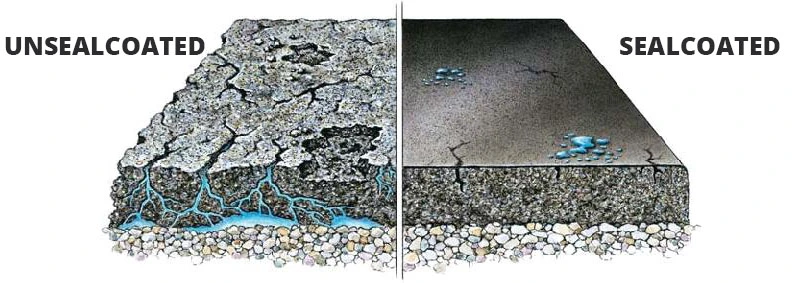
The left side is deteriorated, unprotected asphalt. The right side is the same surface after our sealcoating treatment.
How We Sealcoat a Property
The version most sealcoating pages give you is a generic 4-step overview. This is the actual version, walked through by our operations lead. Commercial jobs run in phases so the property stays open. Nothing gets skipped.
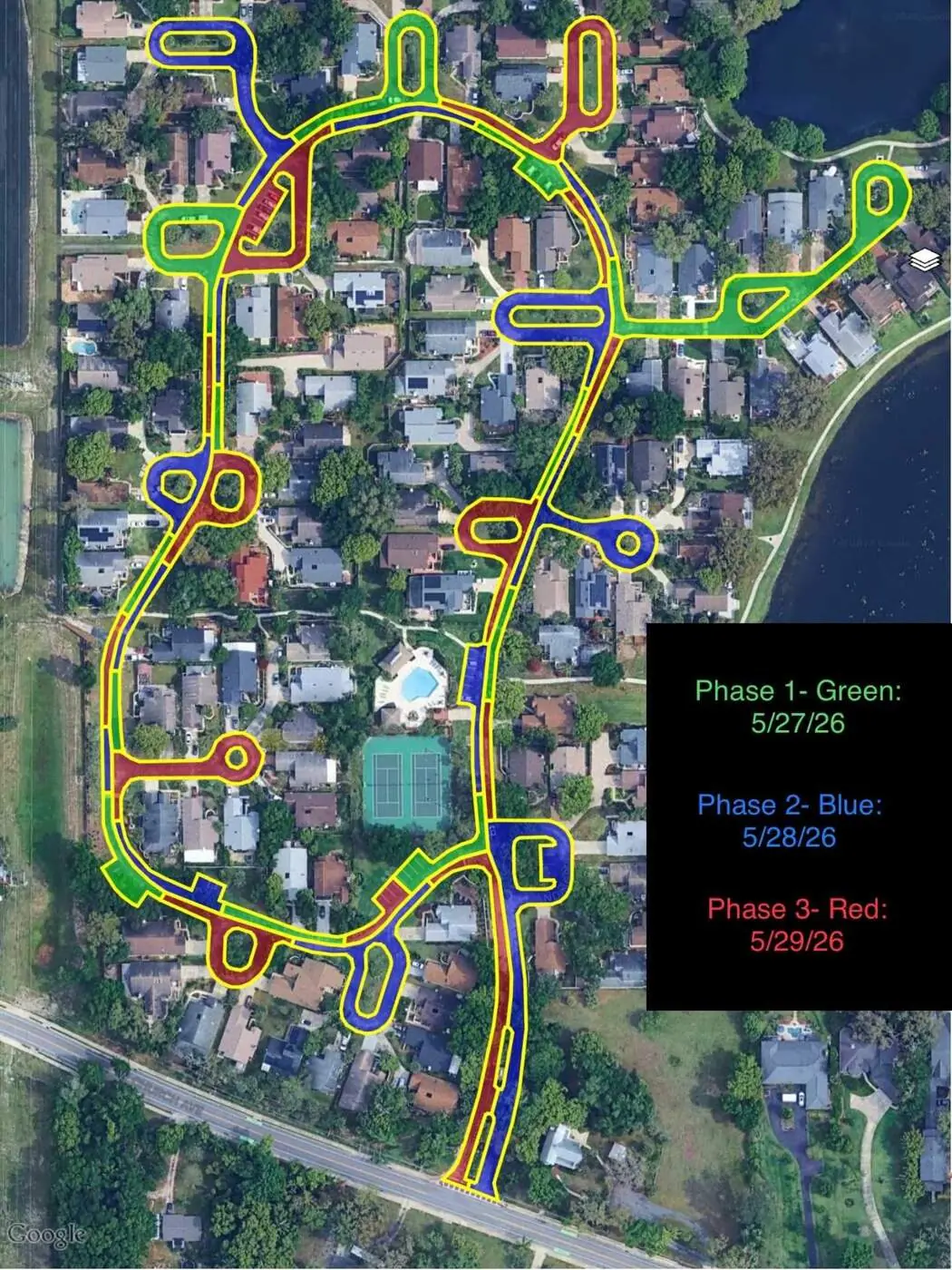
Build the Phase Map
Before we even schedule the job we produce a phase map: a color-coded aerial image that shows exactly what section of the property we are working on each day. Commercial properties usually cannot be shut down for the full 24 hours it takes to apply and cure the sealer, so we split the lot into phases and rotate through them.
This is exceptionally important on restaurant properties with drive-thrus and a single parking lot entrance. Chains like Taco Bell and McDonald's need at least one entry, exit, and drive-thru lane open at all times. The phase map is what makes that possible.
Arrive, Cone Off, Clear the Section
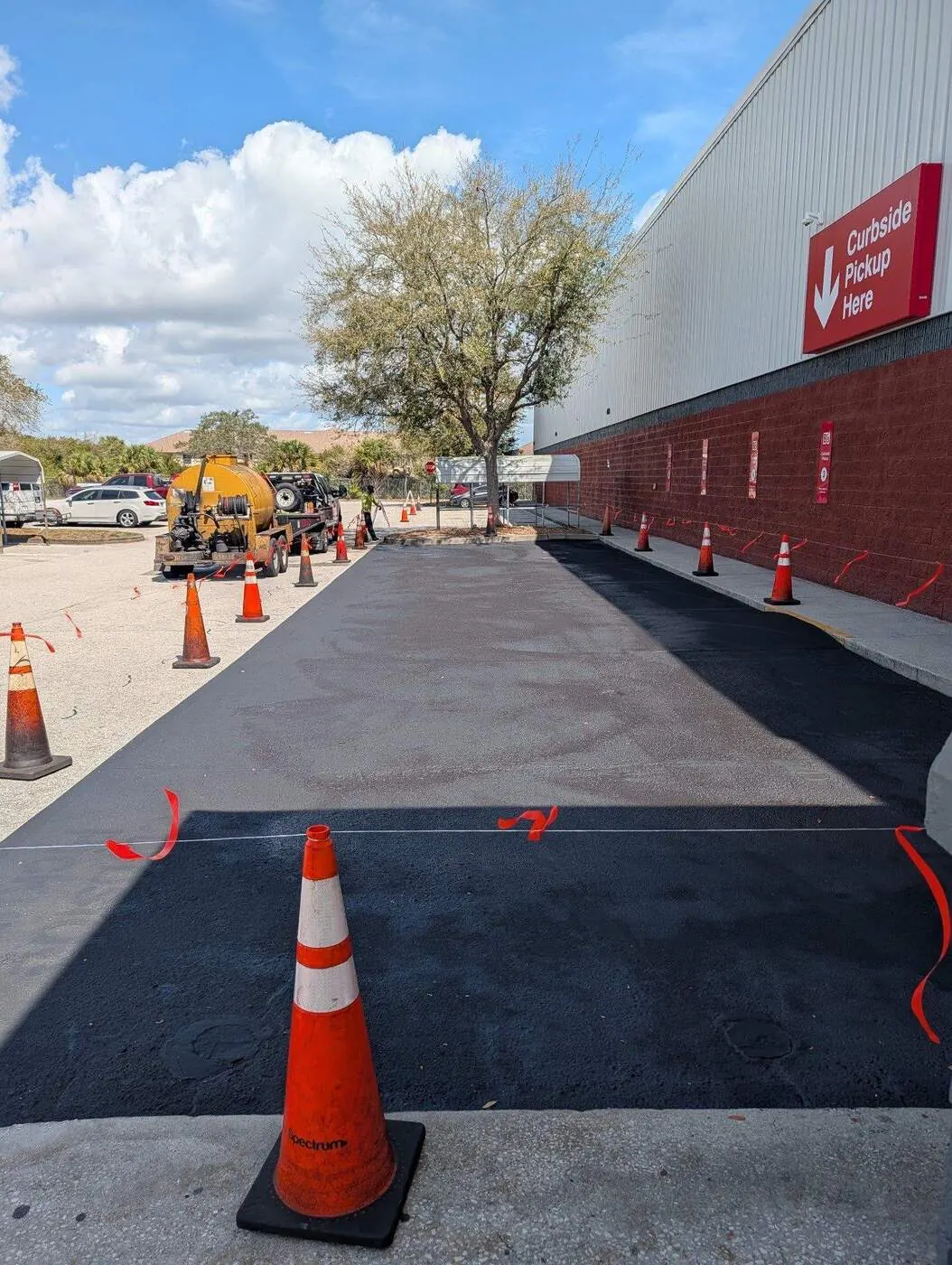
When the crew arrives on site they immediately cone off the section we are working that day and clear it of vehicles and pedestrians. This gets communicated to the property manager and to any tenants ahead of time so there are no surprises.
The section stays closed until the sealer flashes and cures enough to hold traffic again.
Steel-Broom and Blow the Surface
Prep is where a sealcoat job succeeds or fails. Steel brooms and heavy-duty blowers come out. The goal is to leave the surface completely free of heavy debris, sand, weeds, leaves, mud, mold, and anything else that will interfere with the sealer bonding to the asphalt.
If the sealer cannot bond, the whole job fails within 6 to 12 months. Prep is the single biggest predictor of whether a sealcoat lasts 3 years or 6 months.
Agitate the Tank
While the crew is prepping the surface, the sealcoat material is being agitated in the tank. This distributes the sand, water, and additive evenly through the mix. Sand is heavier than the sealer itself, so it will settle to the bottom of the tank if the mix stops moving. Uneven sand distribution means uneven finish and uneven wear.
The tank keeps agitating for the entire duration of the job. This is not something we start and stop.
Cut In the Edges
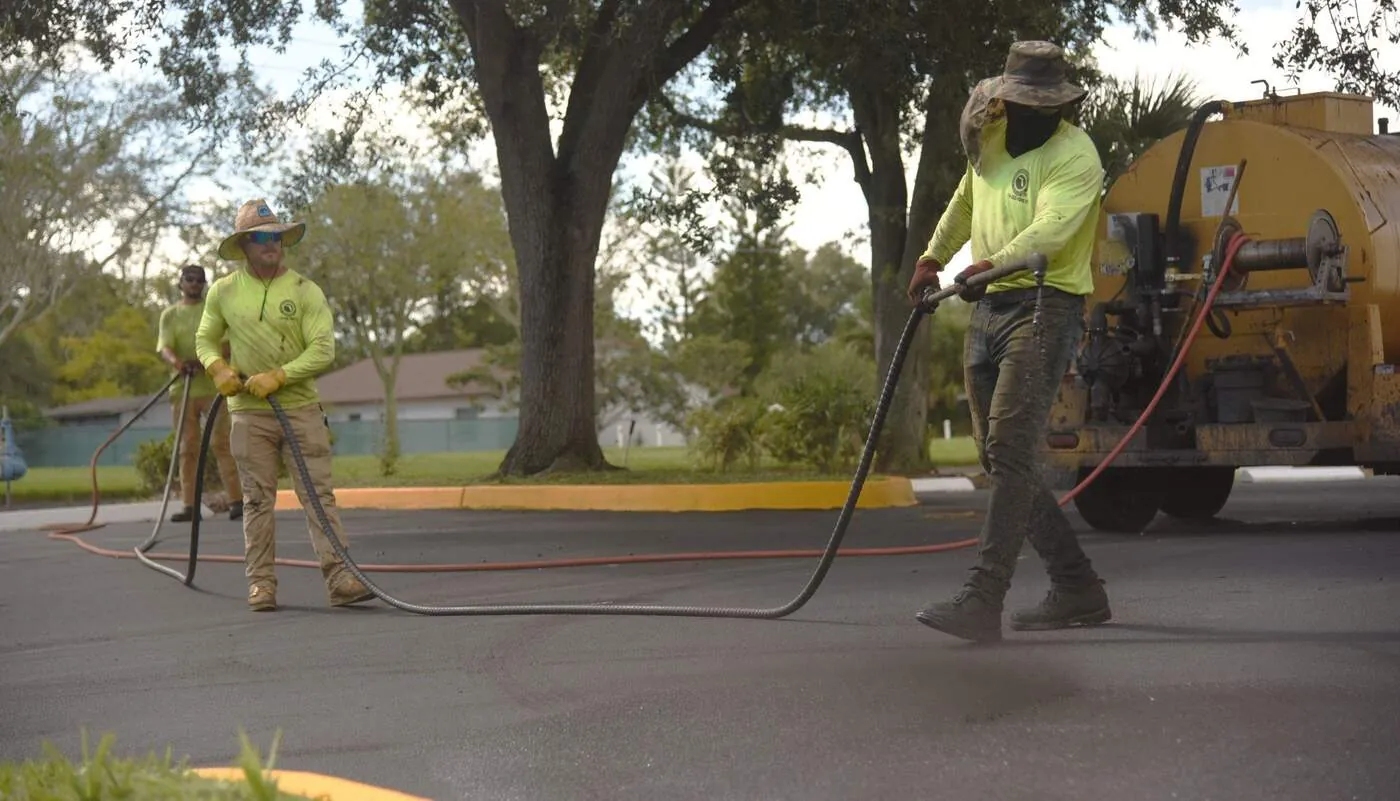
Once the surface is prepped we unroll the hose and begin the cut-in process. The sealer pours out the end of the hose in a thick bead along every edge of the asphalt: curbs, sidewalks, car stops, grass borders, building garages, anywhere we do not want sealer to end up when we start spraying.
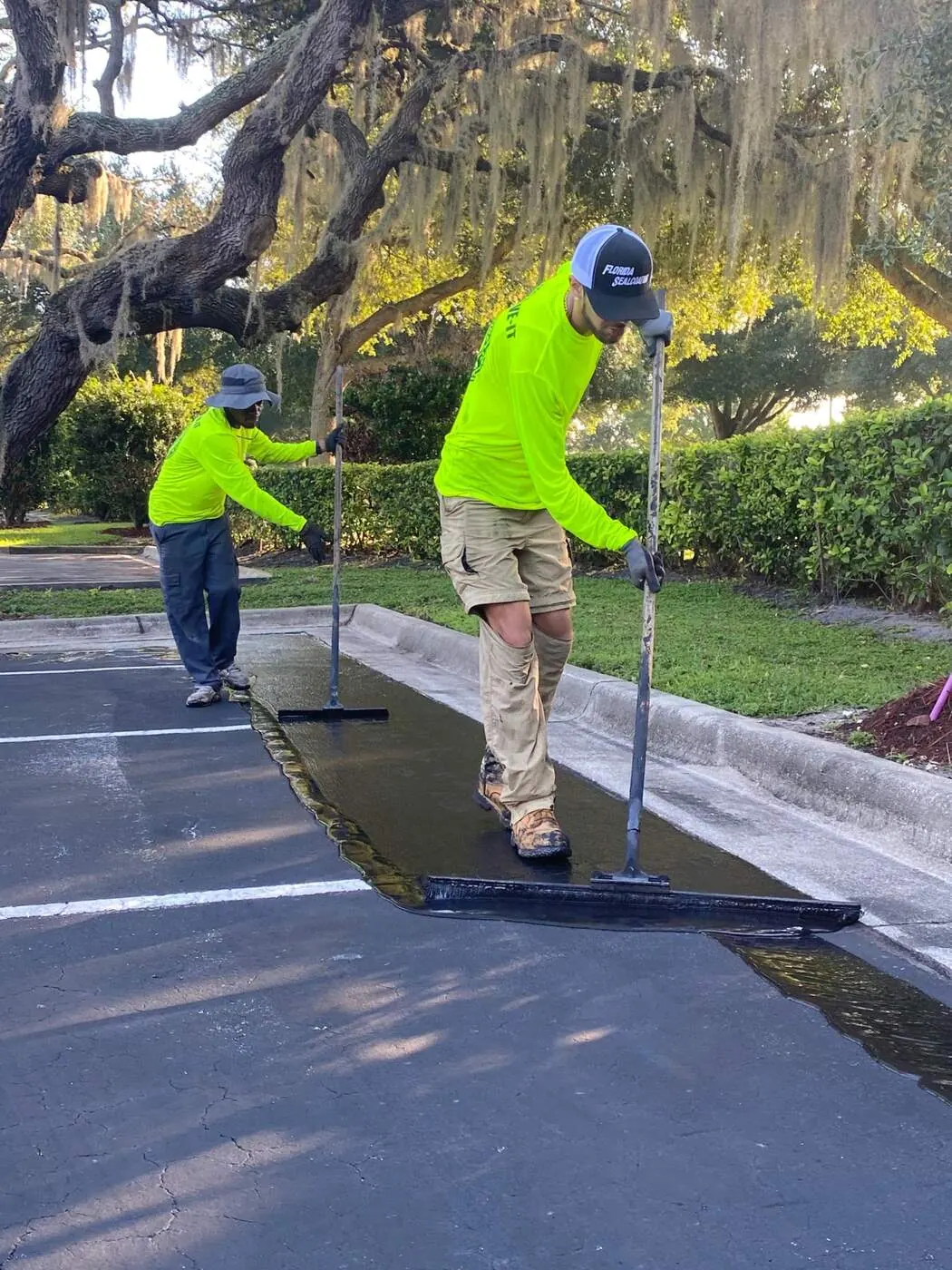
The bead then gets brushed in with squeegees and cut-in brushes. This step is what separates a clean finished edge from a job that shows overspray on every curb.
Spray the First Coat with 50% Overlap
Once the cut-in is done we switch to a spray tip and apply the first coat. Application always starts at the area farthest from the exit point so nobody has to walk or drive across freshly applied sealer.
The sealer is applied with a controlled square-pattern spray using a 50% overlapping pass on each line. That overlap gives us complete uniform coverage, no thin spots, and a consistent film thickness across the entire lot. The crew works backward toward the exit so they can spray themselves out of the area without stepping on wet sealer.
Let It Flash, Then Second Coat
After the first coat is down we wait for it to flash and begin curing. Then the crew goes back and repeats the entire spray process for the second coat. A single-coat job wears through faster than most property managers realize, so we do not offer single-coat pricing.
Confirm Cure, Reset Cones, Pass to Striper
Once the second coat has flashed and is holding, the crew confirms the closure is still secure and the cones are indicating a working area. Then we clear the property. The striper arrives after the sealer has cured enough to hold the paint, usually the next day, and stripes the same phase we just sealed.
The property manager gets a clean handoff and the next phase starts when the previous phase is back in service.
Two Shortcuts We Never Take
Most sealcoat jobs that fail within a year fail because a contractor cut one of these two corners. We will not.
1. We Won't Cut the Material
Cutting sealer with extra water is how a contractor stretches the material to get more square footage per gallon. It works on their margin. It fails on your lot.
Watered-down sealer looks fine for the first week or two. Then it starts thinning. By the end of the first summer it is pulling apart. Every gallon we put down is at spec.
2. We Won't Skip the Prep
Prep is the boring part of sealcoating. Steel-brooming, blowing debris, cleaning oil stains, handling weeds and mold. It is also the single biggest factor in whether the sealer bonds and holds.
A shortcut contractor skips or rushes prep to shorten the job by an hour. The sealcoat then chunks off within months because it never bonded to the asphalt underneath. Prep is not optional on our jobs.
How We Handle Florida Weather
Sealcoat is a weather-sensitive product. Rain during application washes it off before it cures. Extreme heat cures it too fast to lay evenly. Summer humidity slows the cure and can leave the surface tacky. All three conditions are constants in Central Florida from May through October.
Here is how we run jobs around it:
We Start Earlier in Summer
Between May and September our crews start jobs 1 to 2 hours earlier than the rest of the year. We do this to beat the afternoon storms and to spare the crew the worst of the midday heat. It is a real quality-of-life issue for the people doing the work and it produces a better finish.
We Read the Radar, Not the Percentage
The weather-app rain percentage does not tell you what you need to know. We watch the actual radar and read wind shifts on site. We have gotten very good at predicting whether a storm is coming for us or going around us. We rarely get washed out.
We Build Rain Delay Days into Bigger Projects
On larger multi-phase projects we build a rain delay day into the schedule. If a storm shows up mid-phase we shift the remaining work to the delay day. This is how we keep from missing project deadlines during hurricane season.
We Have a 20-Minute Storm Response
When we are on site and a storm pops up we usually have about 20 minutes of indicators before it starts pouring: wind shift, cloud color, radar return, ground saturation. If the storm is small we stop, wait it out, and monitor the wet sealer for puddling. If puddling appears we squeegee it out of traffic zones and let it cure where it will not cause a problem.
If the storm is large, if there is another band behind it on radar, or if the ground is already saturated, we shut down the phase and shift the remaining work to another day. We do not fight the weather when the weather is winning.
When Should You Sealcoat?
Timing determines whether the sealcoat job holds. Our recommendations:
- New asphalt: Wait 6 to 12 months after installation. The asphalt has to finish off-gassing and curing before sealer will bond correctly.
- Maintenance cycle: Every 2 to 4 years for most commercial properties. Beachside properties on a tighter 2 to 3 year cycle. Residential driveways with light use can stretch.
- Best season: Spring through fall. Air temperature needs to be above 50°F and holding.
- Warning signs on your lot: Color fading from black to gray, surface roughness, small surface cracks, and any visible aggregate showing through the top layer.
Not sure whether your asphalt is ready? We do free on-site assessments and give you a straight recommendation. Sometimes the answer is "not yet, wait another season." That is a real answer we give.
Get Free Estimate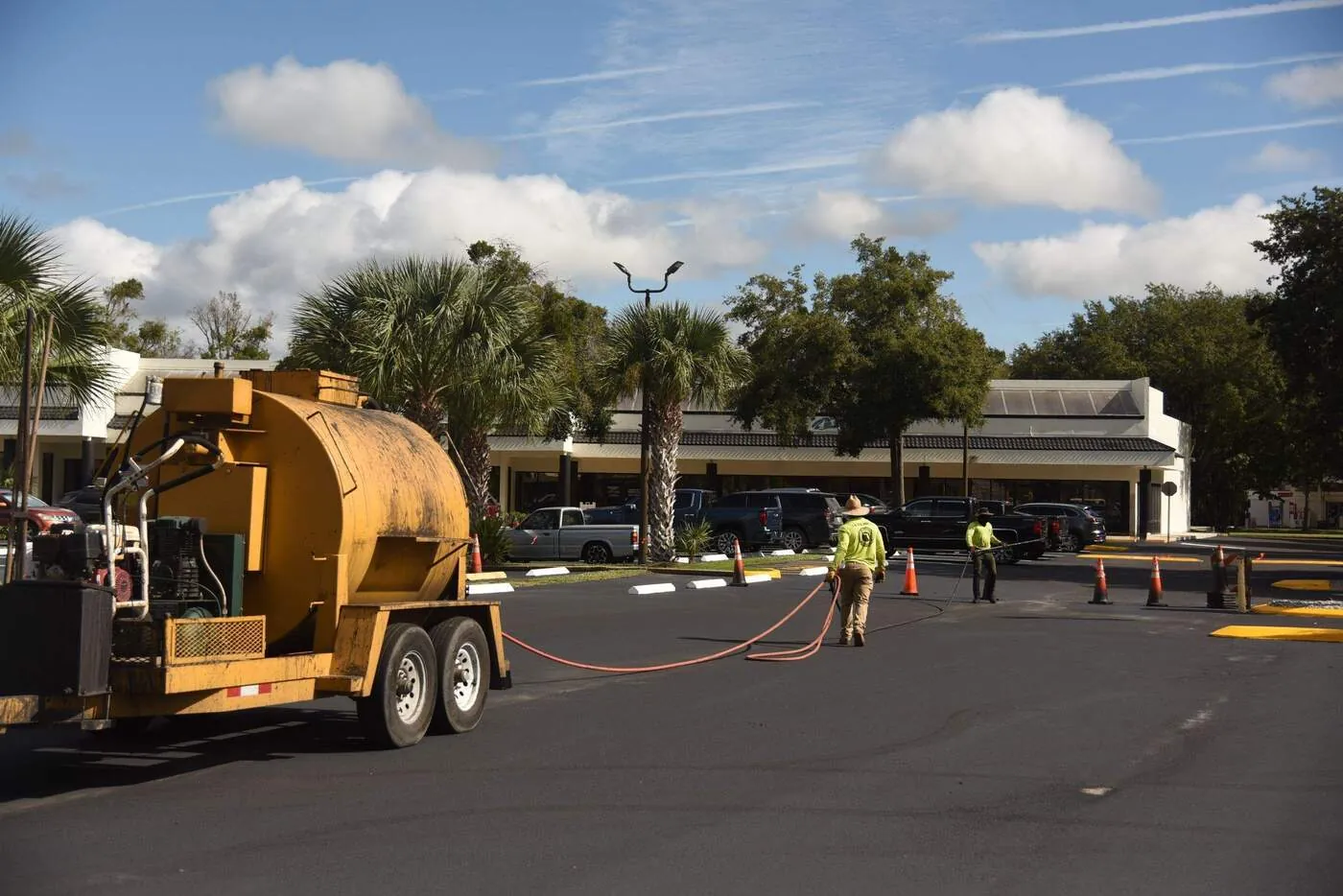
Sealcoating FAQs
How long does sealcoating last?
What does the crew check before starting a job? What gets you to call it off?
What happens if a storm shows up during the job?
How can I tell if a sealcoat job was done right?
What shortcuts do other sealcoating contractors take that you don't?
How much does sealcoating cost?
How long until I can drive on newly sealcoated pavement?
Can you sealcoat over cracks and damaged areas?
What's the difference between residential and commercial sealcoating?
Do you offer a warranty on sealcoating?
We provide sealcoating services throughout Orlando, Sanford, Kissimmee, Altamonte Springs, Daytona Beach, and all of Central Florida. Contact us for service in your area.
Related Services
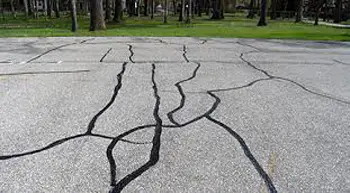
Crack Sealing
Fill and seal cracks before sealcoating so water cannot enter the surface.
Learn More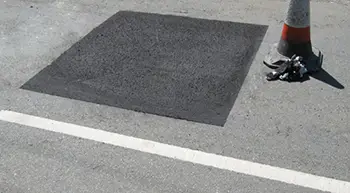
Asphalt Repair
Pothole patching and structural repair for areas too damaged to sealcoat over.
Learn More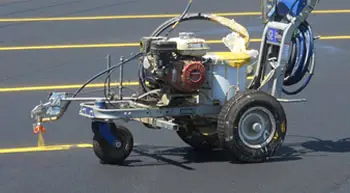
Line Striping
Restripe ADA-compliant parking stalls and directional markings after the sealcoat cures.
Learn MoreReady to Protect Your Asphalt?
Free, no-obligation estimate. We walk the property, check conditions, and give you a written scope with line-item pricing.
(407) 942-3681