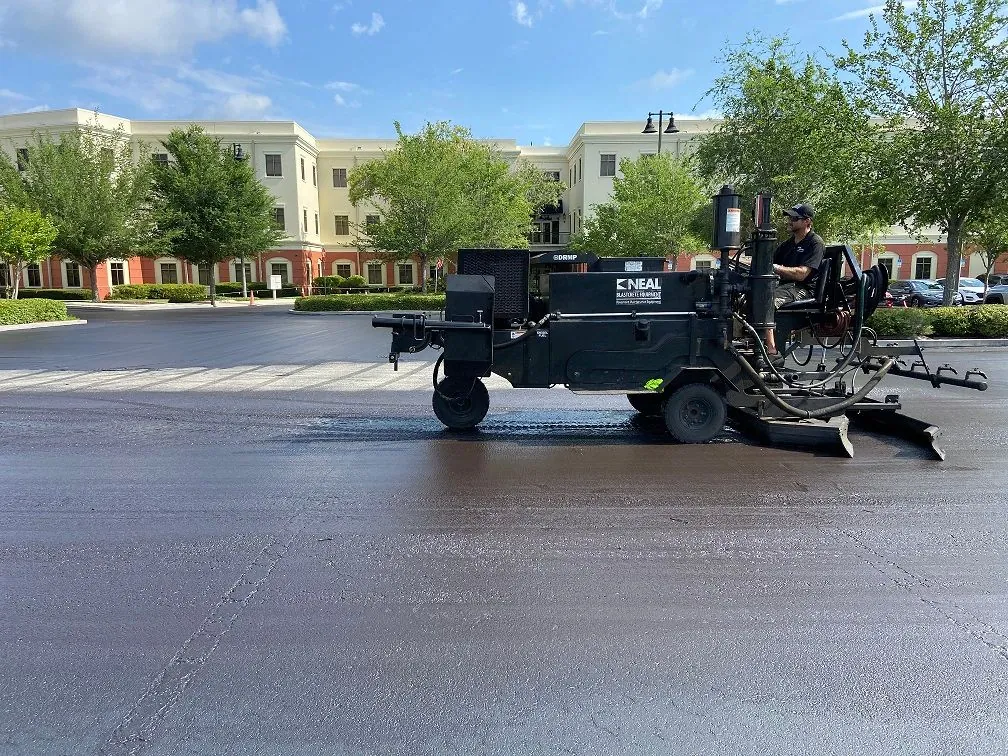
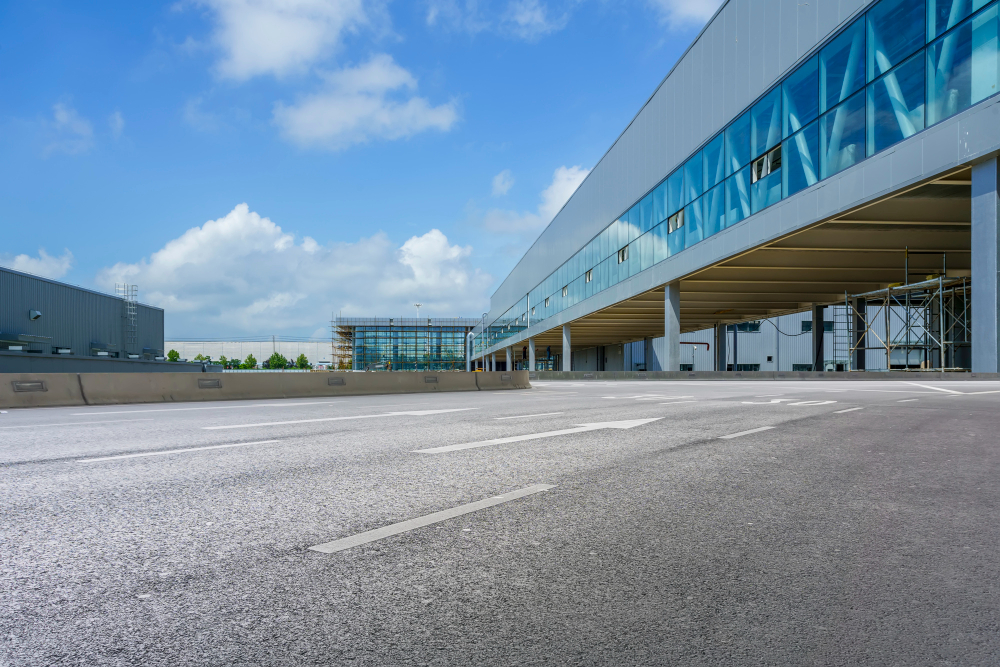
Paving in Daytona Beach, Florida, faces a unique set of challenges when you factor in the massive recreational vehicles (RVs) and tour buses that flock to our city. If you own a hotel near Atlantic Avenue or a retail center close to the Speedway, you know that standard parking lots crumble under this weight. At Florida Sealcoating, we help local property owners choose materials that stand up to 40,000-pound vehicles and the brutal Florida sun.
Our experience in Volusia County shows that commercial pavement fails faster here than almost anywhere else in the country. Between the sandy soil shifting beneath the surface and the humidity attacking from above, your parking lot needs a heavy-duty strategy. This guide breaks down exactly how to pave for heavy traffic so you don't have to repave your lot every five years.
Heavy vehicles like buses and RVs exert nearly 10 times the stress on pavement compared to passenger cars, especially during Florida's hot summers. When you combine a 30-ton vehicle with surface temperatures that can reach 140°F, asphalt becomes pliable and prone to severe rutting.
We see this damage frequently in lots near the International Speedway Blvd corridor. The constant stop-and-go motion of heavy buses creates "shoving" and "corrugation," where the asphalt ripples like a washboard. It's not just the weight; it's the frequency. During peak seasons like Bike Week or the Daytona 500, traffic volume spikes by 200% or more. This rapid increase accelerates wear and tear on lots that were only designed for light sedan traffic. If your pavement isn't engineered for this specific load, you'll see alligator cracking within the first two years.
Daytona Beach's soil is primarily sandy and porous, which drains well but offers poor structural support for heavy loads without proper stabilization. If the sub-base beneath your asphalt or concrete isn't compacted to at least 98% density, the weight of an RV will cause the pavement to sink.
In our work across the peninsula, we often find that pavement failure starts three feet underground. When we dig up failed lots near the Halifax River, we usually find that the native soil shifted. To fix this, we often install a thicker limerock base—typically 10 to 12 inches for heavy-duty areas—to bridge the gap between the unstable sand and the pavement surface. This stabilizes the ground and distributes the weight of heavy buses evenly. Without this solid foundation, even the most expensive asphalt mix will crack under pressure.
For lots handling buses and RVs, you need a "Superpave" mix or a polymer-modified asphalt that resists rutting and cracking. Standard asphalt mixes used for residential driveways just can't handle the shear forces created by heavy tires turning on hot pavement.
We recommend using an SP-12.5 traffic level C or D mix for heavy commercial use. These mixes contain a higher percentage of crushed aggregate and a stiffer liquid asphalt binder. This combination creates a skeleton-like structure inside the pavement that resists deformation. While this might cost about 10-15% more upfront than a standard mix, it doubles the structural life of the pavement in high-traffic zones.
The thickness of the asphalt matters just as much as the mix. For areas with bus traffic, we lay asphalt in two lifts (layers) to achieve a total compacted thickness of at least 3 to 4 inches. We place a structural course first, followed by a friction course. This layering ensures proper compaction. If a contractor tries to lay 4 inches of asphalt in a single pass, it won't compact correctly, leaving air voids that lead to potholes.
Concrete is the superior choice for "static load" areas where heavy vehicles sit still, such as dumpster pads, loading docks, and bus stops. Asphalt is flexible, which is great for moving traffic, but if a 40,000-pound RV parks on hot asphalt for a week, it leaves permanent divots.
For these high-stress zones, we pour concrete with a minimum compressive strength of 4,000 PSI (pounds per square inch). We also suggest fiber-reinforced concrete. These tiny synthetic fibers mixed into the wet concrete help prevent micro-cracks from spreading. It acts like a 3D internal support system.
Concrete needs time to reach its full strength. While asphalt is ready for traffic in 24 hours, concrete requires about 7 days to cure to 70% strength and 28 days for full strength. We also install control joints every 10 to 12 feet. These cuts control where the concrete cracks (because it will crack) so that the damage remains cosmetic and doesn't affect structural integrity.
Concrete typically costs $6.00 to $10.00 per square foot to install, while heavy-duty asphalt ranges from $3.50 to $5.50 per square foot. However, concrete lasts longer with less maintenance, often providing a better return on investment for small, high-stress areas.
In Daytona's climate, a well-installed concrete pad can last 25 to 30 years with minimal repairs. Asphalt usually has a lifespan of 15 to 20 years, but only if you maintain it religiously. For a large parking lot, paving the drive lanes in asphalt and the parking stalls in concrete is a smart hybrid approach. This gives you the cost savings of asphalt for the large areas and the durability of concrete where vehicles park.
Concrete reflects sunlight, which helps lower the surface temperature of your lot (the "heat island" effect). This is a benefit in urban areas of Daytona Beach. However, asphalt is 100% recyclable. When we mill up an old parking lot, that material often goes back to the plant to become new pavement. If sustainability is a major part of your company brand, both options have pros and cons to consider.
Routine sealcoating every 2 to 3 years protects asphalt from oxidation and water intrusion, extending its life by up to 300%. The Florida sun oxidizes the binder in asphalt, turning it from black to gray and making it brittle.
Once asphalt turns gray, it creates sand and rocks on the surface. That's a sign the binder is gone. Sealcoating replenishes this binder. We also fill cracks with hot-pour rubberized sealant. In our tropical climate, rain is a daily occurrence in summer. If water gets into cracks and seeps into that sandy sub-base we discussed earlier, it washes the foundation away. That leads to potholes. Filling a crack costs pennies per foot; fixing a pothole costs hundreds of dollars.
Concrete is lower maintenance, but not zero maintenance. You need to keep the joint sealant fresh. The expansion joints between slabs allow the concrete to expand in the heat. If the caulk in those joints fails, water gets under the slab. We recommend checking and replacing joint sealant every 3 to 5 years to keep the slab stable.
We recently assessed a retail center off Beville Road that handles daily delivery trucks. The original lot was standard asphalt and failed in three years. By switching to a hybrid design—concrete pads for the dumpsters and loading zones, and a modified asphalt mix for the drive lanes—the property owner reduced their repair costs by 60% over the last five years.
Another project near the beachside involved a hotel with RV parking. The salt air and sand were eroding the edges of the pavement. We installed a concrete ribbon curb around the perimeter. This locked the asphalt in place and prevented the edges from crumbling into the sand. These small design adjustments make a massive difference in longevity.
Your parking lot is the first thing customers see. Don't let potholes and rutted pavement drive them away. Whether you need a full rehabilitation of your RV park or a strategic repair plan for your retail center, Florida Sealcoating has the local expertise to handle the job.
We understand the specific soil, climate, and traffic conditions of Volusia County. We'll give you an honest assessment and a paving plan that fits your budget and your traffic load.
Ready to get started? Contact Florida Sealcoating today for a free evaluation of your commercial property.
[1] National Asphalt Pavement Association. "Perpetual Pavement."
[2] Florida Department of Transportation. "Standard Specifications for Road and Bridge Construction." Fdot.gov.
Get a free, no-obligation estimate for your asphalt project. Our team is ready to help protect and enhance your property.
(407) 942-3681