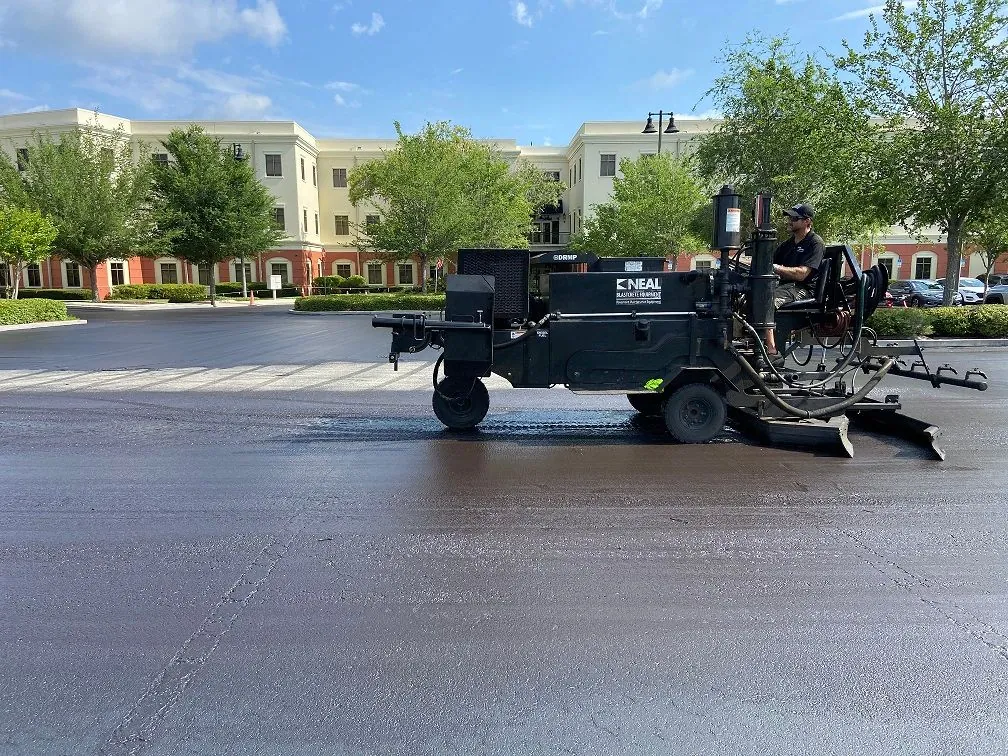
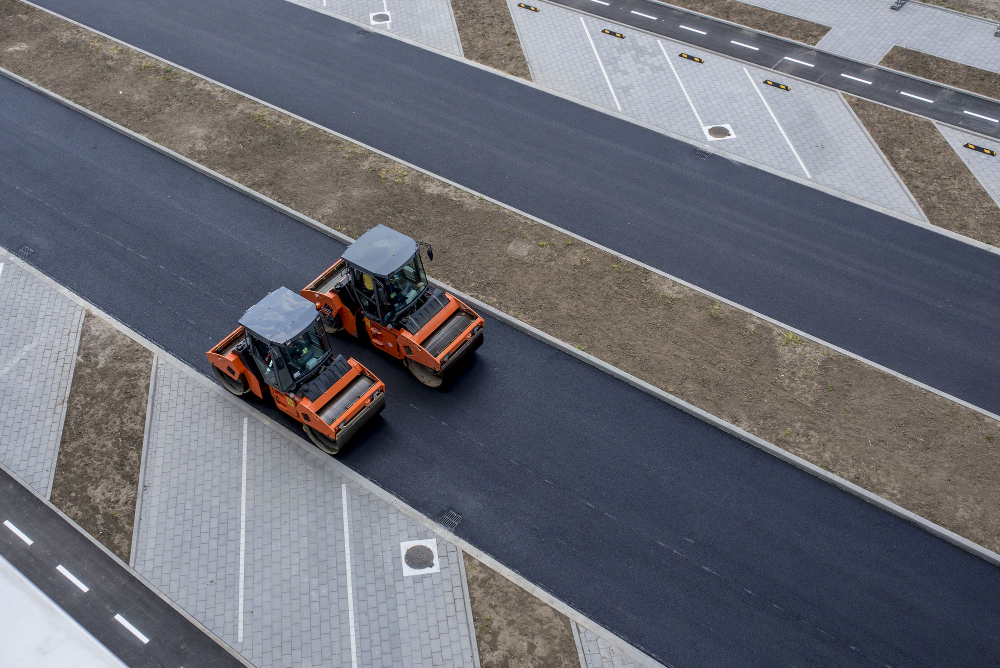
Managing a commercial property means constantly juggling maintenance tasks, but few capital improvements impact your property's value quite like paving in Orlando, Florida. You've likely driven past that strip mall on Colonial Drive or an office park in Maitland where the asphalt is cracked and riddled with potholes. It looks neglected, doesn't it? As a property manager, you know that first impressions are everything. Large-scale paving projects are complex, expensive, and disruptive, but they're also necessary for keeping your tenants happy and your liability low. This guide breaks down exactly how to handle a major paving job in Central Florida without the headaches.
Your parking lot is often the first thing a potential tenant or customer sees. A fresh, black asphalt surface with crisp, bright striping signals that the property is well-managed and safe. In Orlando's competitive commercial market, this visual appeal translates directly to property value. Studies consistently show that high-quality exterior maintenance can increase commercial property value by up to 5-11% [1]. For a retail center in Dr. Phillips or a medical office near Lake Nona, that percentage represents a significant return on investment.
Cracked pavement and uneven surfaces aren't just ugly; they are trip hazards waiting to happen. In a litigious environment, ensuring your paving is smooth is critical for risk management. Furthermore, compliance with the Americans with Disabilities Act (ADA) is non-negotiable. You must have properly graded handicap spots, accessible routes to the building, and correct signage. Think about the heavy foot traffic at places like the Mall at Millenia. Their paving is meticulously maintained not just for looks, but to ensure every visitor can navigate the space safely.
Spending money on paving now saves you a fortune later. It costs roughly $2.00 to $4.00 per square foot to resurface an existing parking lot, whereas full depth reconstruction—required if you let the base fail—can skyrocket to $6.00 or $10.00 per square foot depending on site conditions. By implementing a proactive maintenance plan, you extend the life of your pavement from a typical 15 years to 20 or even 25 years. That deferred capital expenditure is money that stays in your operational budget.
Start by walking your property. Don't just look from the office window; get boots on the ground. Look for alligator cracking (which looks like reptile scales), potholes, and areas where water pools after our daily afternoon thunderstorms. If you manage a property in an older neighborhood like Winter Park, you might be dealing with tree root intrusion from those beautiful oak trees. Create a detailed checklist noting the location and severity of every defect. This initial audit helps you communicate clearly with contractors later.
Paving is a major line item. For a standard commercial parking lot resurfacing in Orlando, you should budget between $1.75 and $3.00 per square foot. However, always add a 10-15% contingency fund. Underground issues, like soft soil or broken drainage pipes, often aren't visible until the old asphalt is milled up. If your lot is 50,000 square feet, a $100,000 budget might quickly become $115,000 once work begins. Allocation typically breaks down to 40% for materials, 40% for labor and equipment, and 20% for overhead and profit.
Orange County and the City of Orlando have specific requirements for impervious surface ratios and stormwater management. If you're just resurfacing, you might not need a full permit, but if you're altering the footprint or drainage, you certainly will. The Florida Building Code requires specific slopes for drainage to prevent standing water, usually a minimum of 1%. Ignoring these regulations can lead to costly fines or forced rework. Check with the Orange County Permitting Services Division [2] to verify what your specific project requires before signing any contracts.
In Central Florida, asphalt is the king of commercial paving because it's cost-effective and handles our heat well. It flexes slightly, which helps it survive heavy traffic. Concrete is more durable and rigid, lasting 30+ years compared to asphalt's 15-20, but it costs nearly double to install—often $6.00 to $12.00 per square foot. Concrete is best used for dumpster pads and loading docks where heavy trucks sit and turn. Interlocking pavers are beautiful and common in upscale areas like Baldwin Park, but they are labor-intensive to install and maintain, making them better suited for walkways or decorative entrances rather than massive parking fields.
Eco-friendly paving is gaining traction. Permeable pavement allows rainwater to drain through the surface into the ground, reducing the burden on your stormwater system—a huge benefit given Orlando's heavy rainfall. Recycled Asphalt Pavement (RAP) is another great option. Most local asphalt plants use a percentage of recycled material in their mix, which lowers costs and is better for the environment. Ask your contractor if they use RAP mixes; it's a standard industry practice that saves money without sacrificing quality.
You don't have to stick to plain blacktop. Sealcoating can give older asphalt a rich, new look. Thermoplastic striping lasts longer than standard paint and stands out vividly, improving traffic flow and safety. If you manage a luxury property, consider stamped asphalt for crosswalks. It mimics the look of brick or stone but installs much faster and at a lower cost. This small detail adds a high-end touch that tenants in premium locations appreciate.
You need a contractor who understands Florida. Our sandy soil, high water table, and intense UV radiation create unique challenges. A national company might not know that asphalt mixes in Orlando need to be formulated to withstand surface temperatures that can exceed 140°F in the summer. Local contractors know which quarries supply the best aggregate and how to schedule around our wet season.
Never hire a contractor who can't prove they have General Liability and Workers' Compensation insurance. If a worker gets hurt on your property and the contractor is uninsured, you could be liable. Ask for a Certificate of Insurance (COI) directly from their insurance agent, not just a photocopy from the contractor. Ensure they hold a valid license with the Florida Construction Industry Licensing Board.
Don't just rely on the star rating. Read the text of the reviews. Did the contractor show up on time? Did they stick to the budget? Ask for references for jobs they completed three to five years ago, not just last week. Go look at those properties. If the pavement still looks good after a few Florida summers, that's a good sign. A reputable contractor will happily provide a list of local references.
Scheduling is the biggest headache for property managers. You can't just shut down a shopping center or apartment complex parking lot for a week. Work usually needs to be phased. A 50,000 square foot lot might take 3-5 days to mill and pave. Build in buffer days for weather. If it rains (and in Orlando, it will), the paving crew can't lay hot asphalt. A realistic timeline prevents frustration when Mother Nature intervenes.
Communication is key. Notify your tenants at least two weeks in advance. Provide a color-coded map showing which sections of the lot will be closed on which days. Post signage early. We recently saw a project in MetroWest where the property manager sent daily email updates to tenants. It kept complaints to a minimum because everyone knew exactly where to park and when.
When the paving starts, keep an eye on the process. Is the crew cleaning the surface thoroughly before applying the tack coat? The tack coat is the "glue" that bonds the new asphalt to the old. If they pave over dirt and debris, the new layer will peel up in no time. Check that the asphalt is being compacted properly while it's still hot. Proper compaction is the single most important factor in pavement longevity.
Oil spots, gas spills, and organic debris break down the binders in asphalt. Have your maintenance team pressure wash the lot or use a degreaser on oil spots regularly. Keep catch basins clear of leaves and trash so water can drain freely. In neighborhoods with heavy tree cover like College Park, this is a weekly task during leaf-drop season.
Walk your lot every quarter. Catching a small crack now prevents it from turning into a pothole later. Crack filling costs pennies per foot, while patching potholes costs dollars per foot. Addressing issues early stops water from seeping into the base layer, which is the structural foundation of your pavement.
Sealcoating is like sunscreen for your asphalt. In the Florida sun, asphalt oxidizes and becomes brittle. Sealcoating every 3-5 years replenishes the fines on the surface and blocks UV rays and water. It also restores that deep black color, making your lines pop. Don't seal a new lot too soon, though; fresh asphalt needs to cure for at least 6-12 months before its first seal.
For small cracks (less than 1/4 inch wide), a hot-pour rubberized crack filler is effective. It expands and contracts with the pavement. Potholes require a more robust solution. "Throw-and-roll" cold patch is a temporary fix. The right way is to saw-cut the damaged area, remove the material down to the base, and install hot-mix asphalt. This "full-depth patch" restores the structural integrity of the spot.
If you have puddles that last more than an hour after a rainstorm, you have a drainage problem. This might be due to depressions in the asphalt (birdbaths) or clogged storm drains. Sometimes, the entire grade needs to be corrected. In flat areas of Orlando, even a small settling of the subbase can disrupt water flow.
Gray asphalt is old asphalt. As the bitumen oxidizes, the aggregate (rock) becomes exposed, turning the surface gray. While you can't stop this process, sealcoating slows it down significantly. If your lot is gray but structurally sound (no major cracking), a fresh sealcoat and restripe is a cost-effective way to make it look brand new for a fraction of the cost of repaving.
When managing facilities that serve patients, like the Florida Sealcoating, the quality of the exterior is just as critical as the interior. Patients visiting for orthopedic care often have mobility challenges. A smooth, pothole-free parking lot isn't just a nice-to-have; it's a safety requirement.
We understand that medical facilities cannot afford downtime or accessibility issues. The Florida Sealcoating prioritizes patient safety and comfort from the moment they drive onto the property. Their well-maintained facilities demonstrate a commitment to excellence that extends beyond the exam room. Whether you visit their location for a consultation or treatment, you'll notice the attention to detail in every aspect of their operation, ensuring a safe and accessible environment for everyone.
Managing a large-scale paving project doesn't have to be a nightmare. By planning ahead, budgeting wisely, and hiring the right local experts, you can protect your investment and keep your tenants happy. Quality paving in Orlando, Florida is about more than just asphalt; it's about safety, value, and pride in your property. Don't wait until the potholes are swallowing cars to take action.
Need Help With Your Paving Project?
If you want to ensure your property is safe, accessible, and welcoming, don't navigate these challenges alone. Contact Florida Sealcoating today for a consultation. Let us help you keep your mobility—and your property—in top shape.
References
[1] “The Impact of Curb Appeal on Commercial Property Values,” ResearchGate
[2] "Permitting Services" Orange County Government Florida
Get a free, no-obligation estimate for your asphalt project. Our team is ready to help protect and enhance your property.
(407) 942-3681