If you're considering residential asphalt paving in Orlando, Florida, you likely want a driveway that can handle our intense heat and summer storms. The process involves more than just pouring blacktop; it requires careful planning to account for our sandy soil and drainage needs. We’ll walk you through the specific requirements, costs, and steps to get a durable driveway that boosts your home’s curb appeal.
Asphalt paving creates a durable surface by combining aggregates like stone and sand with a liquid petroleum binder. It’s the most popular choice for driveways in Central Florida because it’s flexible. Unlike concrete, which tends to crack when our sandy soil shifts during the wet season, asphalt can expand and contract.
This flexibility makes it ideal for our climate. In neighborhoods from Winter Park to Dr. Phillips, homeowners often choose asphalt because it costs 40-50% less than concrete. It’s also faster to install. Our team can typically tear out an old driveway and lay fresh asphalt in just one or two days, minimizing the disruption to your daily routine.
Residential asphalt paving in Orlando generally costs between $3 and $5 per square foot. For a standard 600-square-foot driveway, you can expect to pay between $1,800 and $3,000. This price varies based on the condition of your current driveway, permitting fees in your specific municipality, and the fluctuating cost of oil.
Several factors influence the final quote:
Before we pour a single drop of asphalt, we must assess the land. In our years serving Central Florida, we’ve learned that skipping this step leads to puddling and premature failure. We look at the soil stability and the slope of the land.
We also check for underground utilities. Hitting a water line or fiber optic cable is a nightmare we avoid by calling 811 before digging. During this visit, we’ll discuss your design preferences. Do you need extra parking space for a boat or RV? Do you want a turnaround spot so you don't have to back out onto a busy road like Colonial Drive? We factor all of this into the plan.
You almost always need a permit for driveway work in Orlando. Working without one can lead to code enforcement fines and work stoppages. We handle the paperwork for the Right-of-Way Utilization permit, which authorizes us to connect your driveway to the public street.
If you live in a deed-restricted community like Lake Nona or Baldwin Park, you also need HOA approval. We can provide the drawings and material specs your architectural review board requires. We know the specific aesthetic standards these communities enforce, so we can help you get approval faster.
A driveway is only as good as the ground beneath it. We start by clearing vegetation and removing the old driveway material. Then comes the most vital part: grading.
We use laser-guided equipment to slope the ground so water runs off the sides, not toward your garage or foundation. In Florida, where we get 50+ inches of rain a year, improper grading causes water to pool on the asphalt. Standing water breaks down the binder oils, leading to potholes within a year or two. We grade the sub-base to ensure water flows efficiently into the storm drains or your lawn.
The sub-base provides the structural strength for your driveway. In Orlando, we typically use a 4-to-8-inch layer of crushed concrete or limestone. This material locks together to form a solid platform that supports the weight of your vehicles.
After spreading the base, we compact it with a heavy vibration roller. This step is critical. If the base is soft, the asphalt on top will crack when a heavy delivery truck pulls into your driveway. We test the compaction to verify it’s rock-solid before moving to the next step.
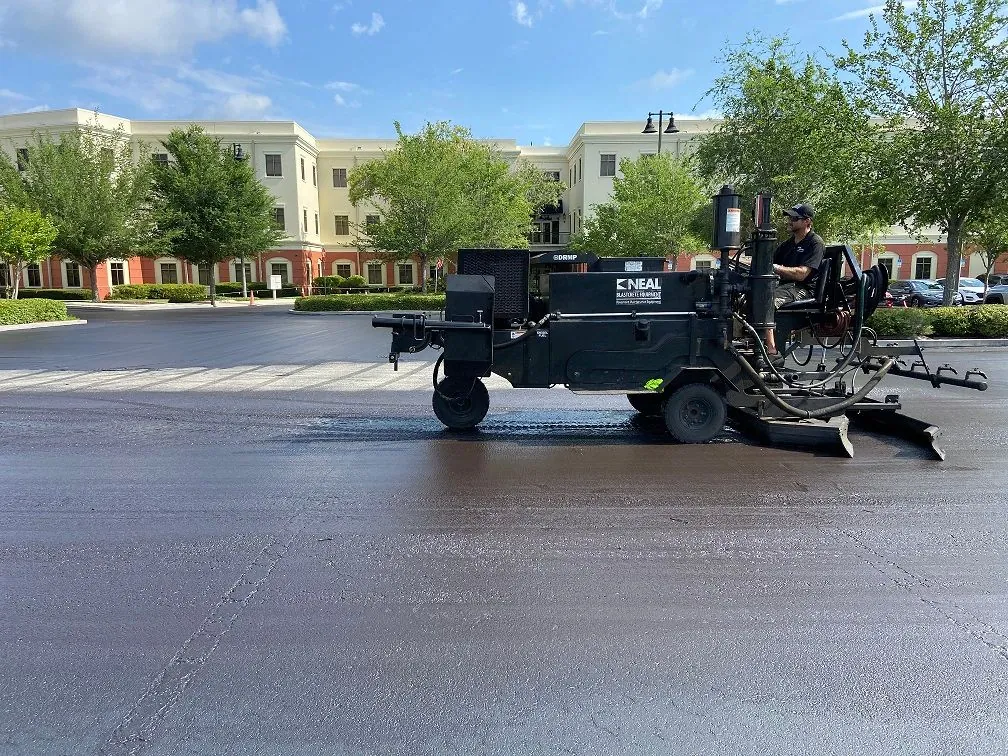
Once the base is ready, we bring in the hot mix asphalt. It arrives in a dump truck heated to roughly 300°F. We transfer it to a paving machine that lays a smooth, even mat across the driveway.
For residential projects, we typically lay 2 to 3 inches of compacted asphalt. We move quickly because the mix needs to stay hot for proper compaction. Our crew hand-works the edges and the apron where the driveway meets the street to ensure a neat, professional finish.
While the asphalt is still hot, we roll it again. This fuses the aggregate and binder together, removing air pockets that could allow water to seep in. We use a combination of heavy rollers for the main sections and plate compactors for the edges near walls or flower beds.
The goal is a smooth, uniform surface. We pay special attention to the transition points—where the asphalt meets your garage floor and the street. These need to be flush to prevent tripping hazards and bumpiness when you drive in.
Your new driveway needs time to harden. You should stay off it with vehicles for at least 24 to 48 hours, depending on the temperature. Since our summer highs often hit 95°F, the asphalt stays soft longer. We might advise waiting three days in July or August just to be safe.
Don't seal the driveway immediately. Fresh asphalt needs to cure and release oils for 6 to 12 months. Sealing it too early traps those oils and keeps the asphalt too soft. We recommend scheduling a sealcoating service about a year after installation. This protects the surface from oxidation caused by our strong UV rays and spills from oil or gas.
The biggest enemy of asphalt in Orlando is UV radiation. The sun dries out the liquid binder that holds the rocks together. Over time, the deep black color fades to gray, and the surface becomes brittle. Once it turns brittle, it cracks.
Another issue is root intrusion. Our beautiful oak trees in neighborhoods like Conway and College Park have aggressive root systems. Roots can lift the asphalt from below, creating bumps and cracks. During our site inspection, we identify nearby trees and may install root barriers to protect your new pavement.
Finally, we see damage from heavy point loads. Since asphalt is flexible, parking a trailer or camper in the exact same spot for months can create depressions or "divots," especially in the summer heat. Using plywood pads under the tires helps distribute the weight and prevents sinking.
Hiring a local expert matters because Florida soil is unique. National chains often treat every soil type the same, but we know how to handle the sandy, unstable ground in Orange County. We know which mix designs hold up best against our specific humidity levels and UV index.
We also have established relationships with local suppliers and county inspectors. This means we can get materials faster and schedule inspections without the delays that out-of-town companies face. When you hire Florida Sealcoating, you're hiring a team that lives here and understands the specific challenges your property faces.
Don't let a cracked, potholed driveway lower your property value. Asphalt paving is a cost-effective way to improve your home's appearance and functionality. Whether you need a simple resurfacing or a brand-new installation, we have the equipment and expertise to get the job done right.
Contact Florida Sealcoating today for a free estimate. We’ll come out, inspect your property, and give you a clear, honest price with no hidden fees. Let's get your driveway looking its best.
[1] FDOT Asphalt Plant Level 1 & 2 Course Manual
[2] Orlando Government: Right-of-Way Forms
Get a free, no-obligation estimate for your asphalt project. Our team is ready to help protect and enhance your property.
(407) 942-3681