Effective parking lot striping in Orlando, Florida, is the unsung hero of successful event management. When thousands of visitors flood venues near the Amway Center or Camping World Stadium, clear pavement markings determine whether arrival is seamless or chaotic. For commercial property managers, strategic layouts aren't just about curb appeal. They're about maximizing capacity, reducing liability, and keeping traffic moving during our busy tourist seasons.
Clear striping guides drivers intuitively, reducing confusion and preventing the gridlock that plagues poorly marked lots during high-volume events. In a city that hosts over 75 million visitors annually, a well-striped lot can increase parking efficiency by 15-20%.
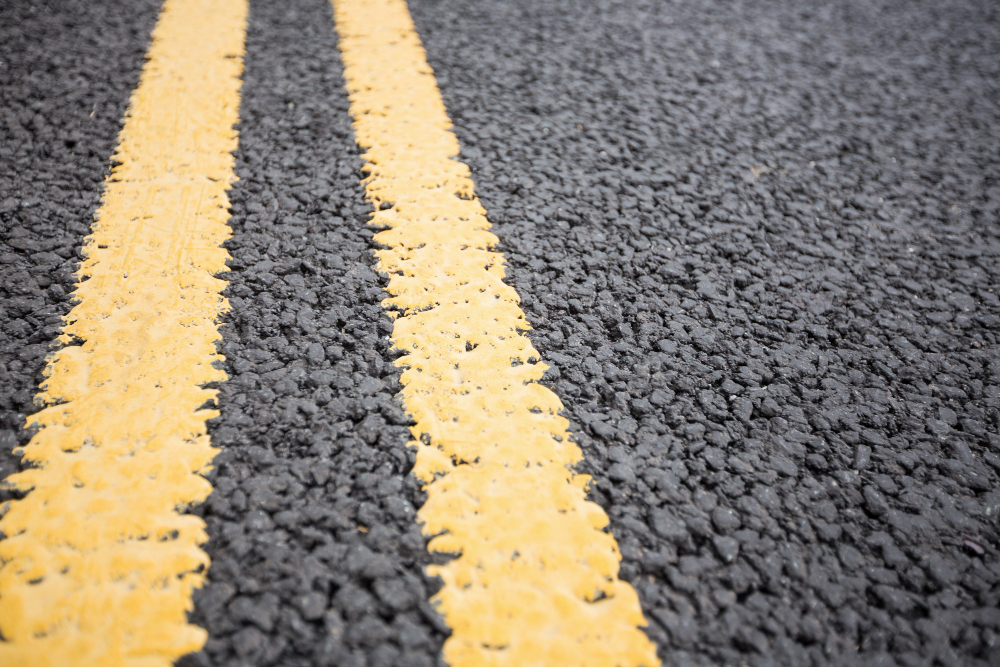
When drivers enter a lot, they make split-second decisions. Faded lines cause hesitation. Hesitation leads to backups that spill out onto busy thoroughfares like Colonial Drive or Orange Avenue. By defining clear lanes and stalls, you remove the guesswork. Our team has seen how fresh paint transforms a disorganized slab of asphalt into a functional machine that handles peak loads without breaking a sweat.
Think about the last time you parked at a busy venue. Did you circle endlessly because the rows weren't defined? That frustration is exactly what we prevent. Strategic striping maximizes your square footage. We often find that re-evaluating the layout during a restripe allows us to add 5-10% more stalls just by optimizing angles and aisle widths. That's direct revenue if you're charging for parking, or better customer experience if you aren't.
Commercial properties in Orlando must strictly adhere to the 2010 ADA Standards for Accessible Design and Florida Statutes Chapter 553. Failing to meet these standards can result in fines starting at $1,000 per violation and opens you up to costly lawsuits.
Accessibility isn't optional. It's the law. For every 25 parking spaces, you generally need one accessible spot. One in every six accessible spots must be van-accessible, requiring an 8-foot access aisle rather than the standard 5-foot aisle. In Florida, we also have specific requirements for the "blue box" markings and signage height that differ slightly from federal minimums.
We often see older lots in Winter Park or College Park that miss these updates. The paint fades, and managers forget that the blue and white markings are legally required to be visible. During events, when lots are full, accessibility becomes even more critical. If a disabled guest can't navigate your lot safely because the crosswalks or access aisles are faded, you're liable.
Beyond the paint, the slope of these spots matters too. ADA stalls can't have a slope steeper than 1:48 (about 2%). When we come out for a striping job, we check these grades. If the asphalt has settled or heaved due to our swampy soil conditions, just painting over it isn't enough. We have to address the surface to ensure you're truly compliant.
Orlando's UV index and 50+ inches of annual rainfall break down standard traffic paint within 18 to 24 months. While asphalt in northern states suffers from freeze-thaw cycles, our pavement battles oxidation and intense heat that can reach 140°F on the surface.
This harsh environment means you can't use cheap paint and expect it to last. Waterborne acrylic traffic paint is the industry standard because it bonds well to asphalt and doesn't bleed. However, for high-traffic crosswalks and stop bars, we often recommend thermoplastic. It's a hot-applied material that lasts 3-5 times longer than paint.
We also deal with humidity. Painting on a day with 90% humidity—which is half the year here—means the paint won't cure properly. It stays tacky. Dirt and tire marks get embedded in the fresh lines immediately. That's why we watch the weather radar like hawks. We schedule jobs during dry windows to ensure the product cures hard and stays bright.
Mold and mildew are other local enemies. In shaded lots with oak tree coverage, like you see in established neighborhoods, green grime obscures white lines quickly. Regular pressure washing helps, but eventually, you need a fresh coat with high-quality, mold-resistant additives to keep those lines popping against the blacktop.
The angle of your parking stalls dictates how fast cars can enter and exit, directly impacting how quickly you can fill your lot during an event.
Ninety-degree parking gives you the most spaces per row. It's the go-to for maximizing capacity. However, it's the hardest for drivers to navigate. They have to come to a near-complete stop to turn in, slowing down the flow behind them.
Angled parking (45 or 60 degrees) is much faster. Drivers can swing in without stopping. This reduces the "friction" in the aisle. For a fast-food joint or a grocery store, 90-degree works fine. But for an event venue trying to park 500 cars in an hour? Angled parking is superior. You might lose a few spots overall, but the turnover speed increases dramatically.
If you switch to angled parking, you usually switch to one-way aisles. This creates a predictable loop. Confusion is the enemy of traffic flow. When drivers know they can only go one way, they don't stop to let someone pass. The traffic moves like a conveyor belt.
We also use directional arrows heavily in these layouts. A simple arrow painted on the ground prevents the "standoff" where two cars meet nose-to-nose in a narrow lane. In the high-stress environment of event parking, these visual cues keep tempers cool and cars moving.
In the Orlando market, restriping a standard commercial parking lot typically costs between $0.25 and $0.50 per linear foot. For a standard 50-space lot, you're looking at a range of $700 to $1,200 depending on the condition of the pavement and layout changes.
Here's where the costs break down:
Don't look at striping as just an expense. It's maintenance. A lawsuit from a trip-and-fall over an invisible wheel stop will cost you thousands more than a simple paint job. Plus, a fresh black-and-white lot looks professional. It tells your tenants and visitors that you care about the property.
Safety isn't just about avoiding accidents; it's about creating clear pedestrian pathways that separate people from moving vehicles. In busy commercial lots, clearly marked crosswalks reduce pedestrian accidents by making the walking zones undeniable.
We use hatching (diagonal lines) to mark "no parking" zones near fire hydrants and corners. This ensures fire trucks can navigate the turns in an emergency. In Orlando, the Fire Marshal is strict about these fire lanes. If your red curb paint is peeling or the "NO PARKING - FIRE LANE" stencils are illegible, you can be cited during an inspection.
Lighting plays a role here too. Paint is reflective. At night, your headlights hit the glass beads mixed into the traffic paint, making the lines glow. This retro-reflectivity is vital for night events. If your striping is old and the beads have worn off, the lines disappear in the dark and rain. Fresh striping guides cars safely to the exit even in a summer downpour.
Wheel stops are another safety feature we highlight. Concrete stops prevent cars from pulling too far forward and blocking sidewalks. But they are tripping hazards if not painted bright yellow or white. We always recommend giving these a fresh coat whenever we strip the asphalt.
Modern striping isn't just a guy with a bucket and a brush. We use laser-guided line stripers that ensure perfectly straight lines every time.
In the past, layouts were measured with tape measures and chalk lines. Human error was common. Now, auto-layout systems allow us to plug in the dimensions and the machine calculates the spacing. This precision matters. If a stall is supposed to be 9 feet wide but ends up being 8.5 feet, you'll get door dings and angry customers. If it ends up being 9.5 feet, you're wasting valuable asphalt.
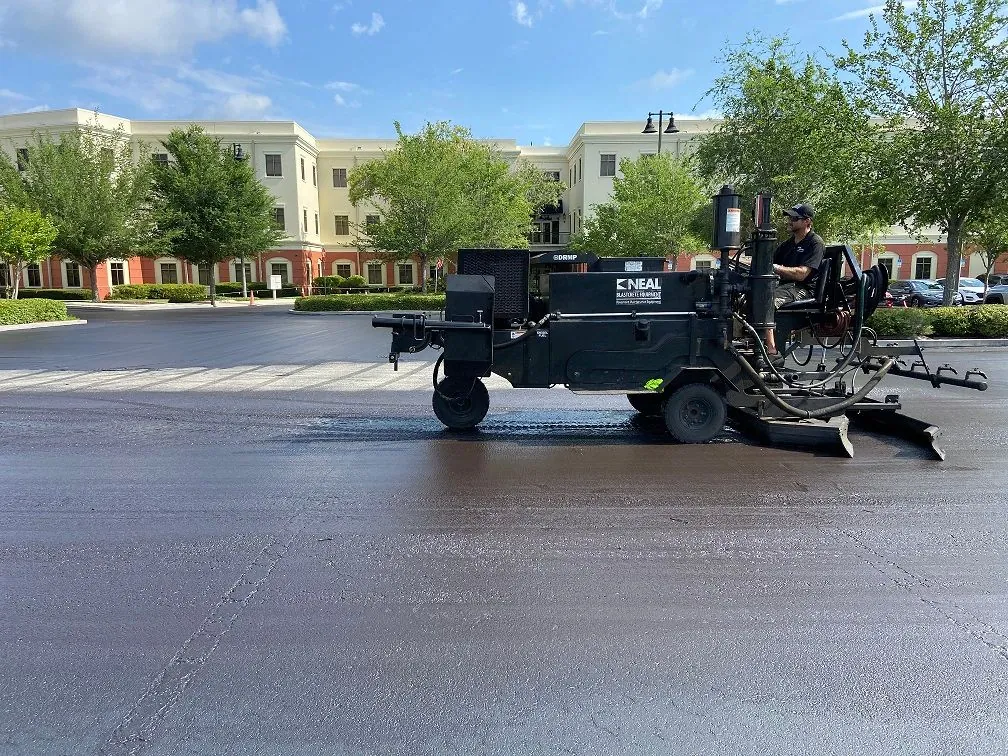
We also use high-pressure airless sprayers. These machines apply the paint at roughly 3,000 PSI. This force blasts away the micro-dust on the surface and injects the paint into the pores of the asphalt. The result is a mechanical bond that lasts longer than paint rolled or brushed on.
Strategic parking lot striping in Orlando, Florida, is a vital investment for any property manager handling event traffic. It keeps you legal with the ADA, safe with the Fire Marshal, and popular with your visitors.
Don't wait until the lines are gone. If you can't clearly see your parking stalls from 20 feet away, it's time for a refresh. A small investment in paint prevents big headaches during your next big event.
Is your parking lot ready for the next rush? Contact Florida Sealcoating today. Our local team understands the unique challenges of Orlando traffic and weather. We'll give you a free consultation and a plan to optimize your lot for safety and flow.
[1] 2010 ADA Standards for Accessible Design, Department of Justice.
[2] Florida Building Code 8th Edition (2023), Florida Department of Business and Professional Regulation.
Get a free, no-obligation estimate for your asphalt project. Our team is ready to help protect and enhance your property.
(407) 942-3681