When comparing coal tar sealer vs. asphalt emulsion for Florida properties, asphalt emulsion is the safer, eco-friendly choice. While coal tar lasts 3 to 5 years and resists chemicals, it poses health risks. Asphalt emulsion lasts 2 to 4 years, resists UV rays, and meets modern Orlando environmental regulations.
Managing a commercial property in Orlando means battling intense UV rays and heavy summer rains. You need a reliable pavement sealer to protect your investment and keep your parking lot safe for visitors. Many property managers struggle to choose the right material for their specific needs. If you require expert guidance right away, contact Florida Sealcoating LLC at (407) 942-3681.
What Are Pavement Sealers and Why Do Florida Lots Need Them?
Pavement sealers act like sunscreen for your parking lot. In Central Florida, temperatures regularly hit 90 degrees with 80 percent humidity. This brutal weather breaks down the binder in unprotected pavement fast. Applying a protective layer prevents oxidation, blocks water damage, and extends the lifespan of your commercial lot by up to 300 percent.
As a commercial property manager, you want to avoid premature replacement costs. Complete Asphalt Paving runs between $3 and $5 per square foot. Protecting that investment makes financial sense. You basically have two main options for protection. You can use an older chemical blend or a modern polymer mix. Local environmental regulations are starting to restrict certain chemicals. You need to understand the chemical differences before scheduling your next maintenance project. Let us look closer at both options.
What Is Coal Tar Sealer and How Does It Perform in Florida?
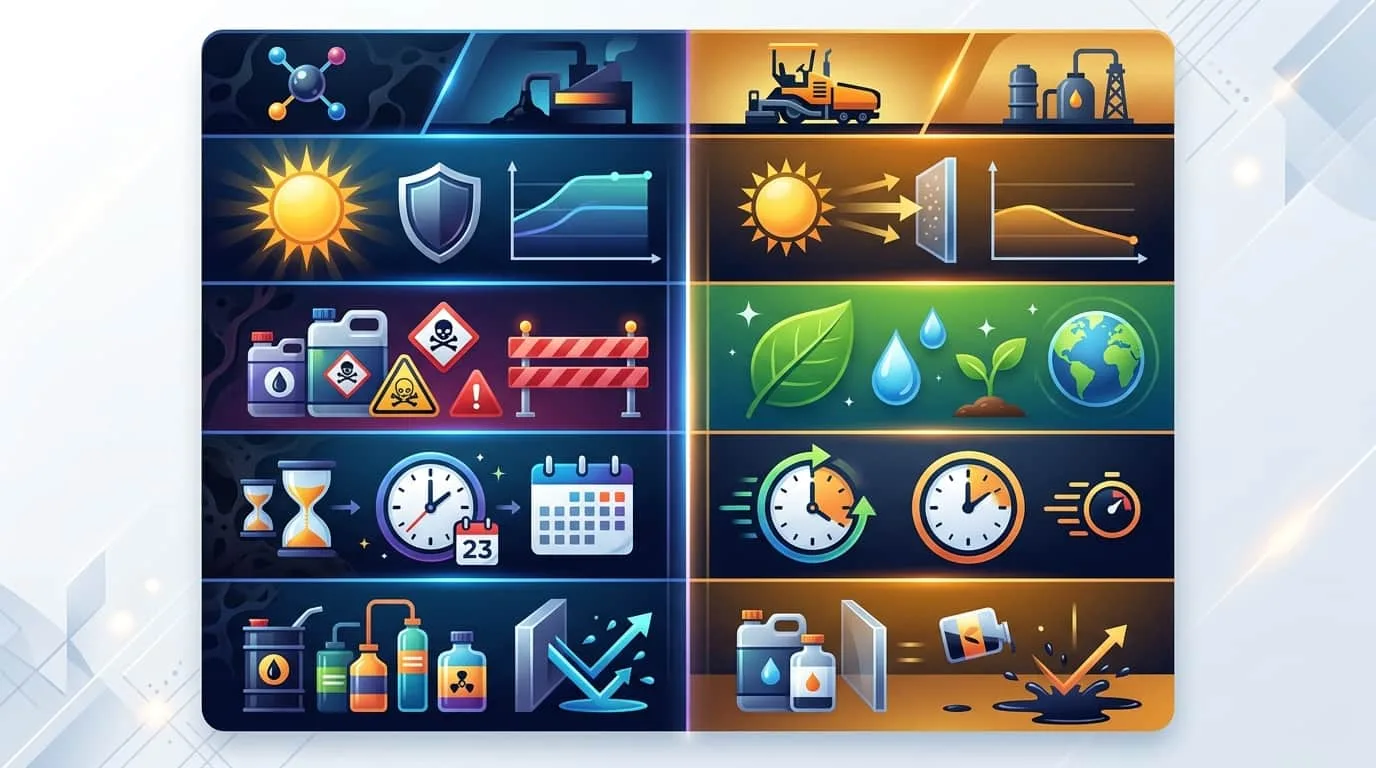
Coal tar sealer is a thick, dark liquid made from refined coal, clay, and water. It lasts roughly 3 to 5 years and provides excellent resistance to gas and oil spills. However, it contains high levels of polycyclic aromatic hydrocarbons. These volatile chemicals present health risks to your workers and patrons.
The initial cost makes this material attractive. You can expect to pay around $0.08 to $0.15 per square foot for a large commercial application. It forms a hard shell that handles heavy vehicle traffic well. But that rigid shell becomes a problem during our hot Florida summers. The material doesn't expand and contract easily with temperature changes. This leads to hairline cracks over time.
Our technicians typically find that older shopping centers near Winter Park still have layers of coal tar from decades ago. Many municipalities now ban this specific chemical blend. The runoff contaminates local waterways and retention ponds. If your property sits near sensitive wetlands, using this product creates significant liability risks.
Why Is Asphalt Emulsion the Modern Alternative for Florida?
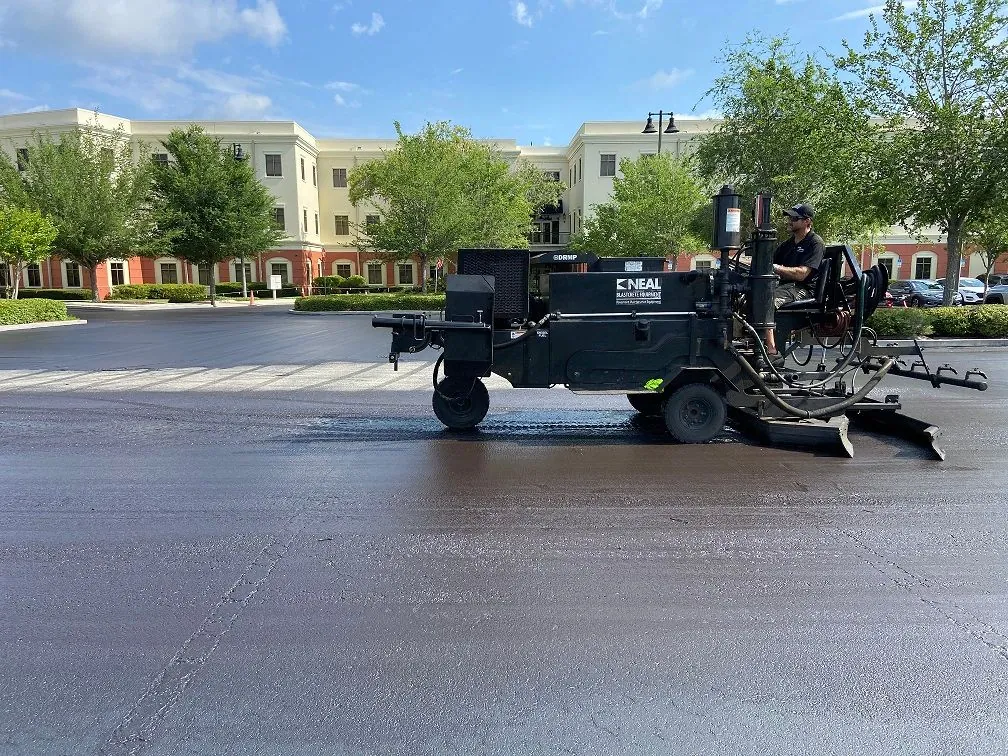
Asphalt emulsion is a water-based pavement sealer made from asphalt cement, water, and specialized polymers. It provides superior UV resistance and flexes with Florida temperature changes. It costs roughly the same as older options but uses eco-friendly acrylics that don't harm local water systems.
This material acts exactly like the original pavement. It replenishes the natural oils lost to oxidation. When you compare coal tar sealer vs. asphalt emulsion, the environmental benefits stand out immediately. Emulsion blends produce almost zero harsh odors during application. This keeps your retail tenants and their customers happy.
If you manage properties along the coast, you know salt air causes rapid deterioration. We frequently provide asphalt and sealcoating in Daytona Beach using polymer-modified emulsion to fight coastal weathering. You do have to monitor the weather closely during application. Emulsion requires 24 to 48 hours to cure fully. High humidity can extend that timeline. You must keep traffic off the wet surface until all the water evaporates.
How Do These Two Sealers Compare for Florida Commercial Lots?
When evaluating coal tar sealer vs. asphalt emulsion side by side, emulsion wins on environmental safety while coal tar slightly edges out on fuel resistance. Both cost between $0.08 and $0.15 per square foot for commercial lots. Emulsion provides better long-term value by preventing structural cracking.
Appearance is relevant for your commercial property. Both products deliver a deep black finish that makes painted parking lines pop. But the aging process looks different. Coal tar fades to a dull gray and chips away in flakes. Emulsion wears away gradually and evenly.
Think about a busy medical facility in Lake Nona. You can't afford strong chemical odors entering the clinic air intake systems. Emulsion solves this problem entirely. Polycyclic aromatic hydrocarbons cause skin irritation and respiratory issues. Your maintenance workforce and property visitors deserve a safe environment. Choosing the water-based alternative eliminates these health hazards.
How Do You Choose the Right Sealer for Your Property?
Select the right sealer by evaluating your specific traffic volume, budget, and local regulatory requirements. If you manage a busy gas station, you might need a specialized fuel-resistant coating. For 95 percent of standard retail and office lots, polymer-modified asphalt emulsion provides the best balance of longevity and safety.
Review your total maintenance budget. You should plan for Sealcoating every 2 to 4 years. Factor in the hidden costs of closing your lot. Emulsion might require a slightly longer cure time, but it protects you from potential environmental fines.
In our 20+ years serving Central Florida, we've learned that property managers who switch to eco-friendly blends save money on long-term liability. We work directly with you to outline the exact chemical differences and create a maintenance schedule that fits your operations. Always consult a licensed local contractor who understands Orange County code requirements and municipal guidelines. For trusted service, partner with Florida Sealcoating LLC.
What Is the Bottom Line on Pavement Management in Florida?
The bottom line on pavement management is that eco-friendly materials represent the future of Florida commercial real estate. You protect your pavement investment while keeping local waterways clean. Ditching harsh chemicals makes your property safer and more attractive to prospective tenants.
The industry continues to shift away from toxic coal derivatives. Manufacturers now create advanced acrylic and polymer blends that outlast older formulas. Staying ahead of these regulatory trends protects your property values. By making smart material choices today, you avoid costly compliance issues tomorrow. Figuring out the debate between coal tar sealer vs asphalt emulsion doesn't have to be confusing.
If you have questions about the right materials for your specific parking lot, we can help. Contact Florida Sealcoating LLC at (407) 942-3681 for a detailed site evaluation.