Drive-thru lanes get a lot of traffic and repeated stress, so they need pavement designed to withstand that use. When the lane starts rutting, cracking at the menu board, or holding water at the window, the right paving fix depends on whether the damage is on the surface or in the base below it.
Florida Sealcoating LLC works with Orlando restaurants, coffee shops, and bank branches to fix drive-thru lanes without shutting down service. To talk about your site, reach out to our team or call (407) 942-3681.
Why Do Drive-Thru Lanes Wear Out Faster Than the Rest of the Lot?
Because every car does the same thing in the same spot. Drivers stop at the menu board, creep forward, stop again at the window, then turn hard to exit, and the pavement takes that load over and over in a narrow path.
A parking space might see a car pull in and sit still for an hour. A drive-thru lane on a busy stretch of East Colonial Drive can see a steady line from breakfast through the dinner rush. All of that braking and turning pushes the asphalt sideways, and over time it forms ruts and shoves near the stopping points.
Idling cars add their own wear. Engines run hot in Florida sun, oil and fluids drip in the same spots, and that softens the surface right where the heaviest stopping happens. Add tight curves around the building, and the outer edge of the lane often breaks down first.
Water is the other problem. When a low spot forms at the pickup window, rain sits there instead of draining. Customers notice puddles, and standing water keeps working its way into cracks, which speeds up damage to the base underneath.
When Will a Repair or Overlay Do, and When Does the Base Need Replacing?
If the damage is mostly on the surface, a repair or overlay can restore the lane. If the base has failed, with deep ruts, sinking, or cracks that keep coming back, the lane usually needs full removal and replacement.
Surface issues look like fading, fine cracks, and light raveling. In those cases, patching the worst spots and placing a new layer of asphalt over a sound base can give the lane a fresh, smooth surface without digging it all out.
Base problems are different. Ruts that deepen every season, spongy spots near the window, or alligator cracking at the menu board often mean the foundation has broken down. Putting an overlay on top of a failed base just hides the problem for a short time before the same damage shows through.
Our asphalt paving assessments look at both the surface and what is happening below it. On a busy lane off Sand Lake Road, for example, only the stopping zones might need full-depth work while the rest of the lane just needs an overlay, which keeps the scope focused.
How Can You Keep the Drive-Thru Open During Paving?
Schedule the work after hours, split it into phases, or both. That way, the lane stays open during your busiest periods, and customers barely notice the project.
For many restaurants and banks, the drive-thru is the business. Closing it for a full day can mean real lost sales and frustrated regulars. Planning around your hours, deliveries, and peak times is part of the job, not an afterthought.
After-hours work lets crews mill, pave, and finish while the building is closed. Phasing works well when the lane is long or wraps around the building. Crews can handle one section at a time while traffic is routed around the work zone with cones and clear signage.
Our commercial asphalt services team will walk the site with you, review your operating hours, and suggest a schedule that fits. You know the plan and the order of work before anything starts, so your staff can prepare.
Why Restripe the Lane and Stacking Area After Paving?
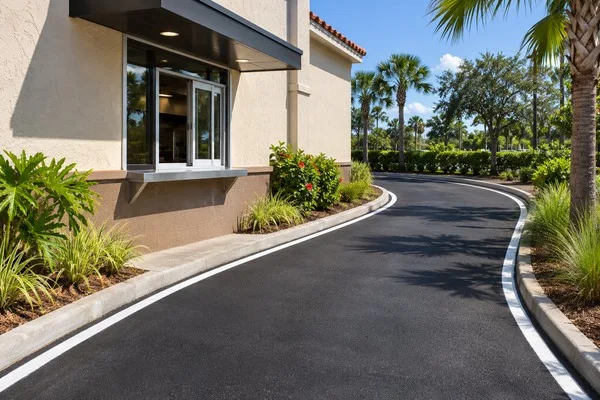
Fresh striping tells drivers exactly where to go. Clear lane lines, arrows, and stacking marks keep the line moving, prevent cars from blocking parking spaces, and make the new pavement look finished.
The stacking area is where cars wait their turn. When those markings fade, drivers bunch up, cut into the lot, or block the entrance. That creates a mess for other customers and can slow down service at the window.
Restriping is also a chance to fix layout issues. If cars regularly back up into the street or cut corners around the building, adjusting the arrows and lane lines can help guide traffic more smoothly. Shops near Mills 50 with tight lots often benefit from small layout tweaks like these.
Our asphalt and sealcoating in Orlando crews handle the paving and striping together, so your lane reopens ready to use.
Ready to fix a drive-thru that is wearing out too fast? Call (407) 942-3681 or contact Florida Sealcoating LLC to schedule a site assessment.