A high traffic retail center in Sanford should get sealcoating every two to three years. If your lot was last sealed more than three summers ago, it is probably overdue, and the asphalt is already paying for it.
That window is where the math works. Seal too often and you waste budget on a surface that didn't need it. Wait too long and you are paying for crack repair, patching, and eventually a resurface. At Florida Sealcoating LLC, we plan these cycles for commercial properties across Seminole County from our Sanford office. If you aren't sure where your lot stands, schedule an inspection with our team at (407) 942-3681.
Plan on every two to three years for a busy retail center. Lighter use commercial lots, like a small office building, can sometimes stretch to four, but retail rarely earns that much slack.
Traffic is what shortens the cycle. A plaza along the SR 46 corridor near Seminole Towne Center sees steady car traffic all day, delivery trucks behind the anchors, and a lot of tight turning in the drive lanes. Every one of those turns scuffs the top layer. Stalls in front of a grocery store wear faster than the back rows nobody parks in, so the whole lot is only as good as its busiest aisle.
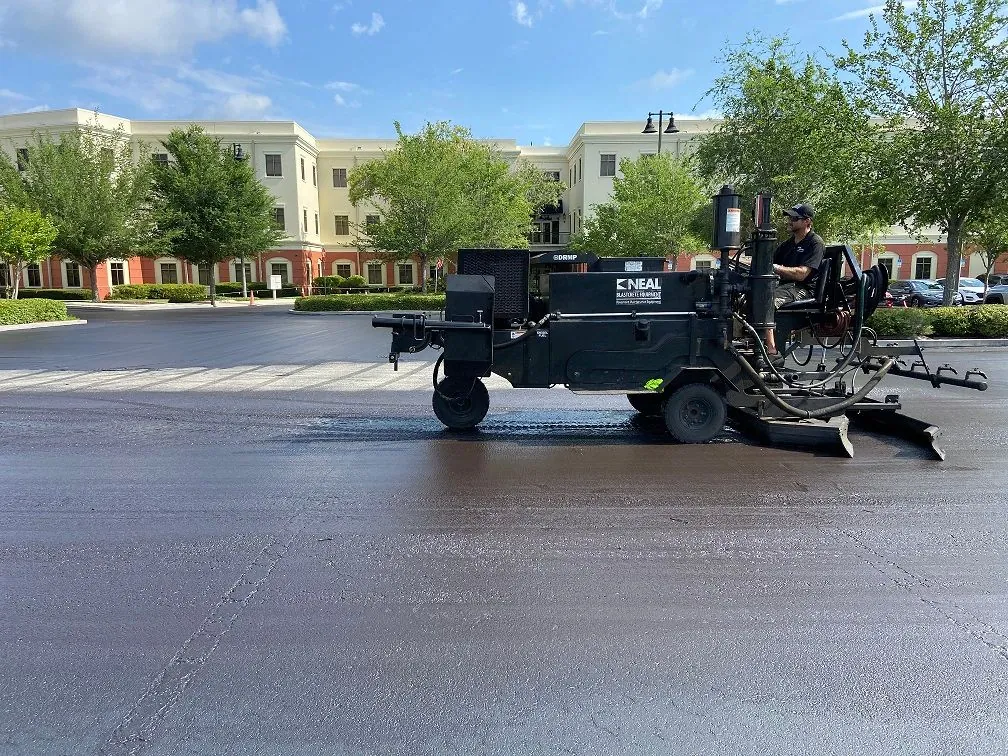
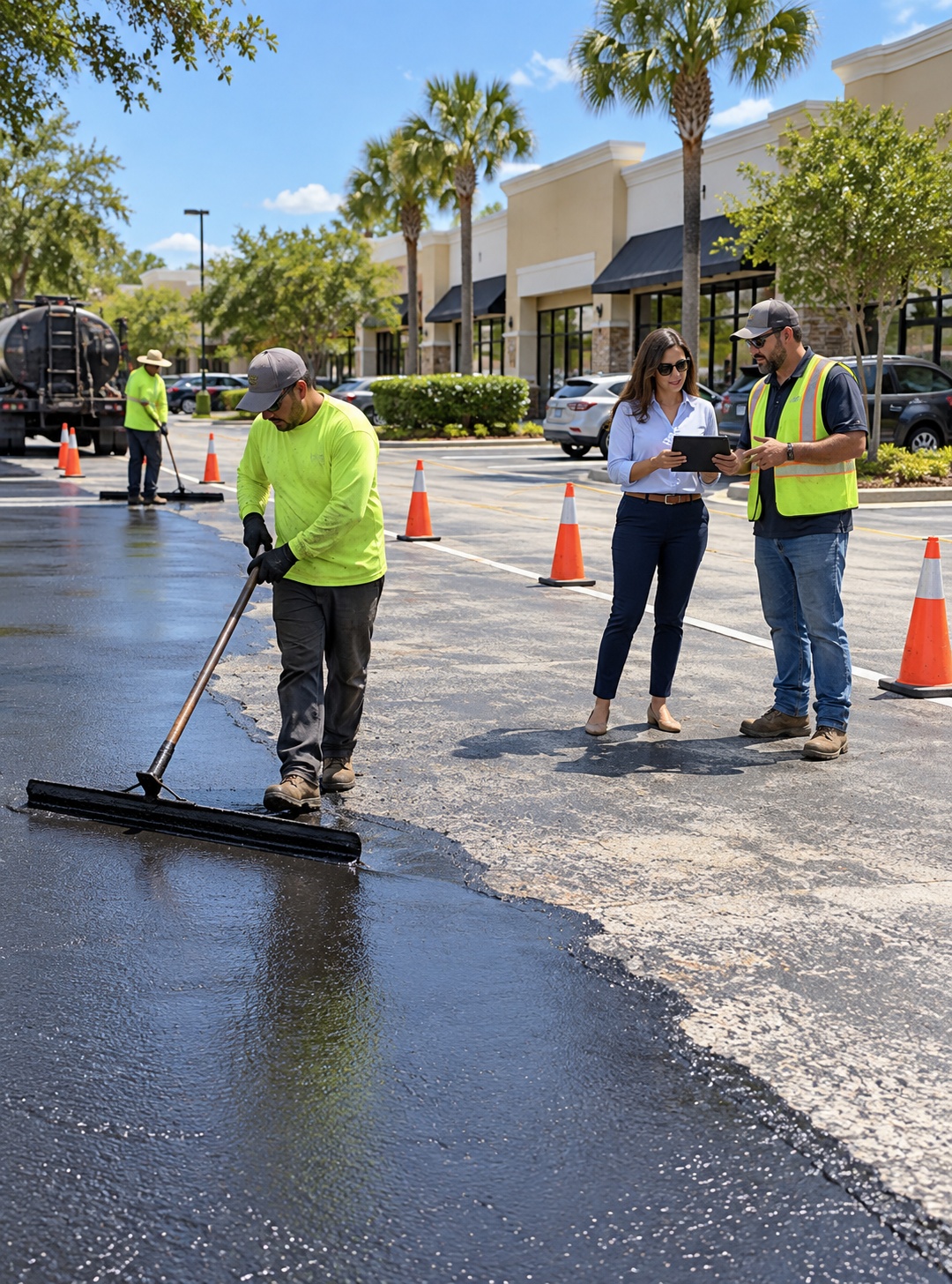
What goes down matters as much as how often. We use SealMaster products and apply two coats with a 50 percent overlap on each pass, because one thin coat on a retail lot tends to show traffic paths within a year. A proper sealcoating job gets steel brooming, blowing, and oil spot treatment first. Skip the prep and even a good sealer won't bond where the grease is.
The sun dries out the asphalt binder, and the rain finds every crack that follows. Central Florida gives your pavement heavy doses of both, and it gets almost no break between them.
UV oxidizes the binder that holds the stone together. That is why unprotected asphalt goes from black to gray. Oxidized asphalt turns brittle, and brittle asphalt cracks. Then the summer pattern takes over. From about May through September, afternoon storms roll through Sanford most days, and water pours into those hairline cracks and softens the base underneath. Add oil and fuel drips in the parking stalls, which break down asphalt on their own, and you have a surface under attack from three directions.
The strip centers along US 17-92 show this clearly. Lots that were sealed on schedule still look dark and tight. The ones that skipped a cycle show raveling at the stall edges and cracks running toward the storm drains. Weather also shapes the work itself. In summer we start crews an hour or two early and watch live radar, not the forecast percentage, so the sealer has time to set before the afternoon storm.
Gray color, a rough or sandy surface, stone showing through the top layer, and small cracks are the main signs. If you see two or more of them, the lot is past due.
Walk the lot in daylight and look at the busiest aisles first. Faded lines are another giveaway, because striping usually wears alongside the seal. You can freshen parking lot striping anytime, but paint on bare, oxidized asphalt doesn't last long. Smaller lots near historic downtown Sanford get a lot of stop and go parking in a tight footprint, and the signs show up there first.
When you've been in this business long enough, you see what the Florida sun and rain can do to a parking lot that isn't protected properly. We got a call from the owner of a retail center that had waited too long between sealcoating visits. You could barely see the lines at all. That is what an overdue lot looks like, and by then it usually needs repairs on top of a reseal. Catching it a year earlier costs a lot less.
A written plan turns sealcoating from an emergency expense into a line item you can budget for. It also keeps small problems from turning into the kind of repair that eats a whole year's capital budget.
A practical schedule for a Sanford retail center looks like this: walk the lot every year, seal cracks as they appear, sealcoat every two to three years, and restripe with each seal so the layout stays readable. For budgeting, commercial sealcoating on our work typically runs about $0.08 to $0.15 per square foot, depending on condition and prep. That is a small fraction of what a full resurface costs.
Scheduling matters to tenants too. The sealer needs 24 to 48 hours before traffic, so we phase retail centers in sections, work nights and weekends, and give managers a map to share with tenants ahead of time. Crews from our office on Kastner Place are close enough to handle most Seminole County plazas without long lead times. That's the core of how we handle asphalt and sealcoating in Sanford.
If your lot is gray, cracked, or hard to read, it is time to get it on a schedule. Call (407) 942-3681 or book a lot inspection with our team, and we will tell you exactly where your pavement stands and what the next three years should look like.
Get a free, no-obligation estimate for your asphalt project. Our team is ready to help protect and enhance your property.
(407) 942-3681