
The main difference in the coal tar vs asphalt emulsion debate comes down to environmental impact and flexibility. Coal tar offers deep black color and fuel resistance but contains harmful chemicals (PAHs) that run off into waterways. Asphalt emulsion provides an eco-friendly, flexible seal that protects Florida's environment while extending pavement life by up to 300%.
Florida commercial property managers face a tough choice when protecting parking lots. The heavy summer rain and intense UV rays break down unsealed pavement fast. To get a free evaluation of your property, contact Florida Sealcoating LLC at (407) 942-3681. We understand the regulatory pressure HOA boards face regarding environmental runoff.
During a recent trip log evaluating commercial parking lots near the St. Johns River, our team documented a massive shift toward eco-friendly asphalt emulsions in Volusia County to protect local waterways. Property owners want surfaces that look great but do not harm the local ecosystem. We will help you weigh the costs and performance metrics so you make the best choice for your community.
What Are Coal Tar Sealers and How Do They Work?
Coal tar sealers are a traditional pavement coating made from a byproduct of the coking process used in steel manufacturing. They create a hard, durable barrier that resists gas and oil spills very well. This makes them a frequent choice for high-traffic gas stations and industrial sites where fuel leaks happen often.
While coal tar provides a deep black finish and excellent chemical resistance, it comes with significant drawbacks. The material contains high levels of polycyclic aromatic hydrocarbons (PAHs). These toxic compounds cause serious environmental concerns when they wear off and wash into local storm drains. The hard nature of coal tar also makes it prone to cracking under the intense heat of a Florida summer. Because of the environmental and health risks, many municipalities now restrict or heavily regulate the application of these traditional sealers.
What Are Asphalt Emulsion Sealers, and Are They Better?
Asphalt emulsion sealers use the same petroleum base as the pavement itself, mixed with water and mineral fillers to create a flexible protective coating. They offer a much safer alternative that bends and moves with your pavement during extreme temperature shifts. This flexibility prevents surface cracking and makes them ideal for the Central Florida climate.
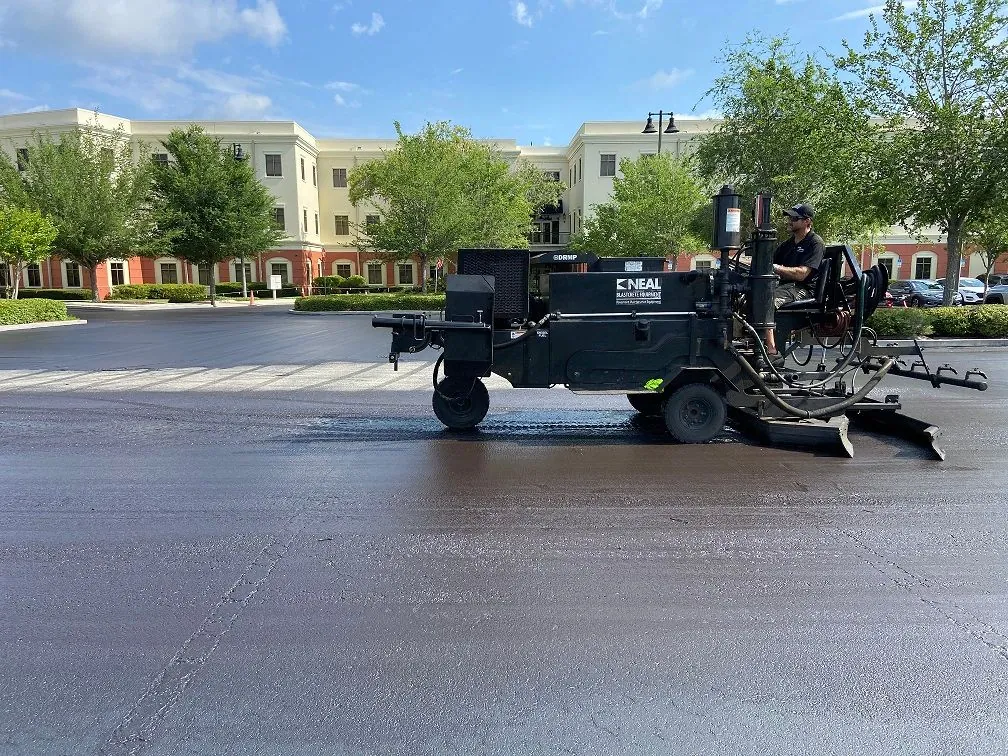
When you choose asphalt emulsion for your Sealcoating project, you get a product that emits significantly lower volatile organic compounds (VOCs). They smell less intense during application and cure safely without releasing harmful chemicals into the air. While they might cost slightly more upfront and require careful application, they provide a rich black finish that protects your investment perfectly. The eco-friendly formula makes them the preferred choice for residential communities, schools, and environmentally conscious retail centers.
How Do Pavement Sealers Affect Local Waterways and Health?
Pavement sealers directly impact local water quality when summer thunderstorms wash surface residue into community retention ponds. Coal tar contains up to 1,000 times more PAHs than asphalt-based products. These toxins accumulate in the soil and water, posing severe risks to aquatic life and pets that play near the runoff.
Our technicians typically find that HOA boards in strict communities like Lake Nona and Celebration prioritize asphalt emulsion specifically for health reasons. When cars drive over coal tar, the friction grinds the dry sealer into a fine dust. Wind and foot traffic track this toxic dust into nearby homes and businesses. Asphalt emulsion eliminates this health risk entirely. By choosing an eco-friendly product, you protect the health of your residents and help preserve Florida's delicate water systems.
Which Sealer Performs Best in the Florida Heat?
Asphalt emulsion performs better in Florida because it flexes with the pavement when ground temperatures exceed 130 degrees. This flexibility prevents the hairline fractures that typically appear in rigid coal tar coatings. Both options require temperatures above 50 degrees to apply, but emulsion cures effectively to handle our daily rain patterns.
Unprotected asphalt typically lasts 10 to 15 years before the base fails. Regular maintenance with either product can push that lifespan to 25 or 30 years. Your maintenance schedule plays a bigger role in longevity than the specific product type. We recommend applying a fresh coat every 2 to 4 years. If your pavement already shows signs of deep structural failure, you might need complete Asphalt Paving rather than a surface coating.
How Should HOA Boards Choose the Right Pavement Sealer?
HOA boards must balance upfront costs, maintenance longevity, and environmental responsibility when selecting a sealer. Commercial applications typically run between $0.08 and $0.15 per square foot. While coal tar might sit at the lower end of that range, the environmental liability often outweighs the initial savings.
In our 20+ years serving Central Florida, we have helped over 8,000 customers navigate this exact decision. If you manage a community near sensitive wetlands, asphalt emulsion is the only responsible choice. If you manage heavy industrial traffic with constant chemical spills, you might need to weigh the chemical resistance of coal tar against local regulations. For expert guidance on your specific layout, rely on our specialists for asphalt and sealcoating in Sanford. We evaluate your drainage patterns, traffic volume, and budget to recommend the exact right formula.
The Bottom Line on Pavement Protection
The coal tar vs asphalt emulsion debate requires you to look beyond the initial price tag. You must consider the health of your community, the strict environmental regulations in Florida, and the intense weather conditions your pavement faces every day. Asphalt emulsion provides the durability you need without the toxic runoff that harms our waterways.
Trust a local expert to help you protect your property the right way. Florida Sealcoating LLC delivers commercial-grade results backed by decades of hands-on experience in Seminole, Orange, and Volusia counties. To protect your investment and schedule a free evaluation, contact Florida Sealcoating LLC at (407) 942-3681.