
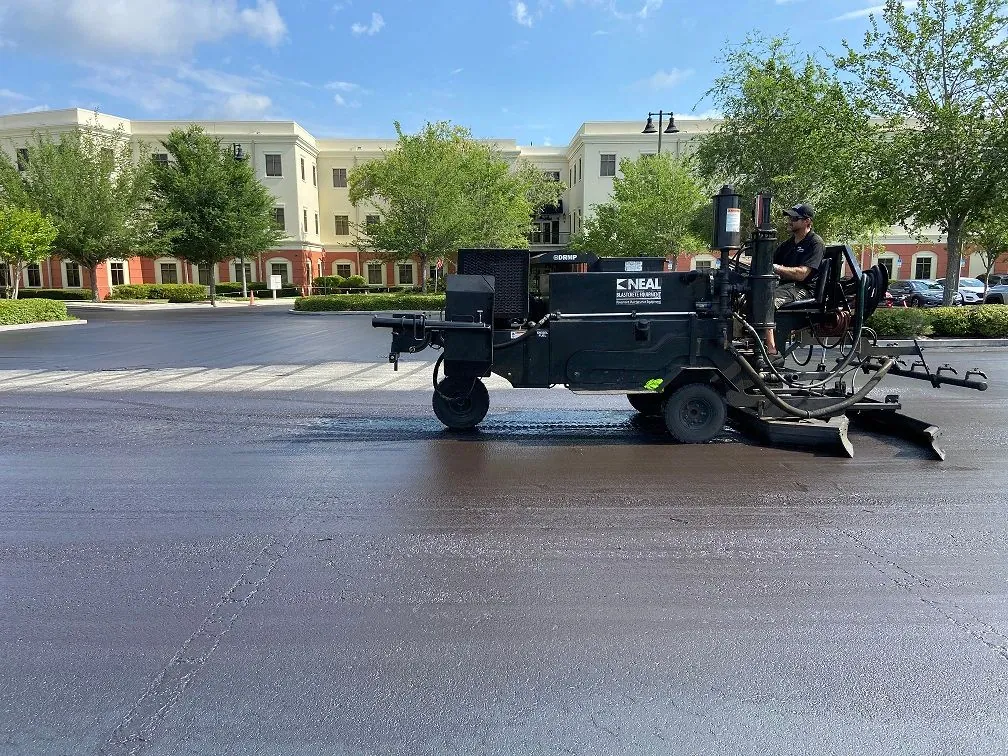
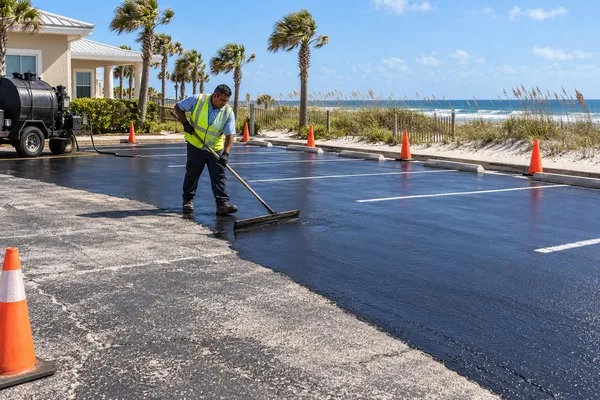
Parking lots near the coast age faster than lots inland. Intense sun, salt-laden air, and heavy rain all work on the asphalt at once, so a Daytona Beach property usually needs asphalt sealing more often than the same lot an hour west would.
Matching your schedule to your location protects the pavement and your budget. To get a coastal maintenance plan, contact our team or call (407) 942-3681.
How do UV, salt air, and heavy rain break down asphalt near the coast?
Each one attacks the asphalt in a different way. UV rays dry out the binder that holds the pavement together, salt draws in moisture and speeds up surface breakdown, and heavy rain pushes water into every small crack.
Sun exposure is relentless on the coast. With little shade and bright reflection off nearby water and light buildings, unsealed asphalt fades from black to gray and turns brittle faster than inland pavement.
Salt is the factor many managers overlook. Lots along A1A and the beachside take a steady coating of salt spray carried on the breeze. That salt settles into the surface, holds moisture against it, and helps wear away the fine material on top.
Then come the storms. Summer downpours and tropical systems soak the lot, and water that gets into cracks weakens the base underneath. Together, these forces wear coastal pavement down much faster than one factor alone.
Why does a standard inland sealing interval leave coastal lots under-protected?
Inland schedules are built for milder exposure. Apply the same interval to a coastal lot, and the sealcoat often wears through well before the next application is due, leaving the asphalt unprotected for months.
One of our customers managed two properties, one inland and one in Daytona Beach. She assumed she could use the same schedule for both, but noticed the Daytona Beach lot looking much worse. We explained that the coastal conditions called for a different schedule.
That gap between when the seal wears out and when it is renewed is where most damage happens. Sun and salt hit bare asphalt, cracks open, and water finds its way in.
A coastal schedule closes that gap by planning reapplication based on how fast the seal actually wears on your lot, not on a generic calendar. Regular inspections help fine-tune the timing as you learn how your lot holds up.
What signs show your coastal lot is due for asphalt sealing?
The clearest sign is color. When the surface fades from rich black to gray, the protective layer is wearing thin. Other signs include loose gravel on the surface, fine hairline cracks, and water that soaks in instead of beading up after rain.
Check high-traffic areas first. Entrances, drive lanes, and turning areas wear fastest, and they often show trouble before the rest of the lot. A quick walk after a rainstorm makes these spots easy to see.
Look closely at spots near the edges of the property, especially on the ocean side or near the Halifax River. Those areas often take the most wind and salt exposure.
Oil and fuel stains are another clue. Sealcoat resists those spills, so stains that soak into the asphalt mean the protection is fading. Our sealcoating service restores that barrier before the damage goes deeper.
How does consistent sealing defer expensive repaving?
Regular sealing protects the asphalt you already have, which pushes back the day you need to repave. Sealcoating costs a fraction of repaving, so keeping the surface protected is one of the best returns a property manager can get.
Once asphalt becomes brittle and cracked through to the base, sealing is no longer enough. At that point, the only fix is patching large areas or replacing the pavement entirely, both of which cost far more and disrupt tenants longer.
For busy commercial lots along International Speedway Boulevard and the beachside, consistent sealing keeps the pavement looking good and performing well between larger projects. We provide asphalt and sealcoating in Daytona Beach with schedules built for coastal conditions.
Protect your lot from the coast's harshest conditions. Call Florida Sealcoating LLC at (407) 942-3681, or request a coastal maintenance schedule for your Daytona Beach property.