Your parking lot is telling you something. Maybe it's starting to fade to gray, or you're spotting a few cracks near the entrance to your building. The question most facility managers face is whether to sealcoat or resurface — and choosing the wrong option can cost thousands of dollars more than necessary.
If you manage properties in Orlando, the stakes are higher than most places in the country. Florida's climate is relentless on asphalt, and a surface that looks fine today can deteriorate fast once the rainy season hits. Understanding the difference between these two services is one of the most ROI-driven decisions you'll make for your property this year.
Need help evaluating your pavement now? Call Florida Sealcoating LLC at (407) 942-3681 for a free on-site assessment.
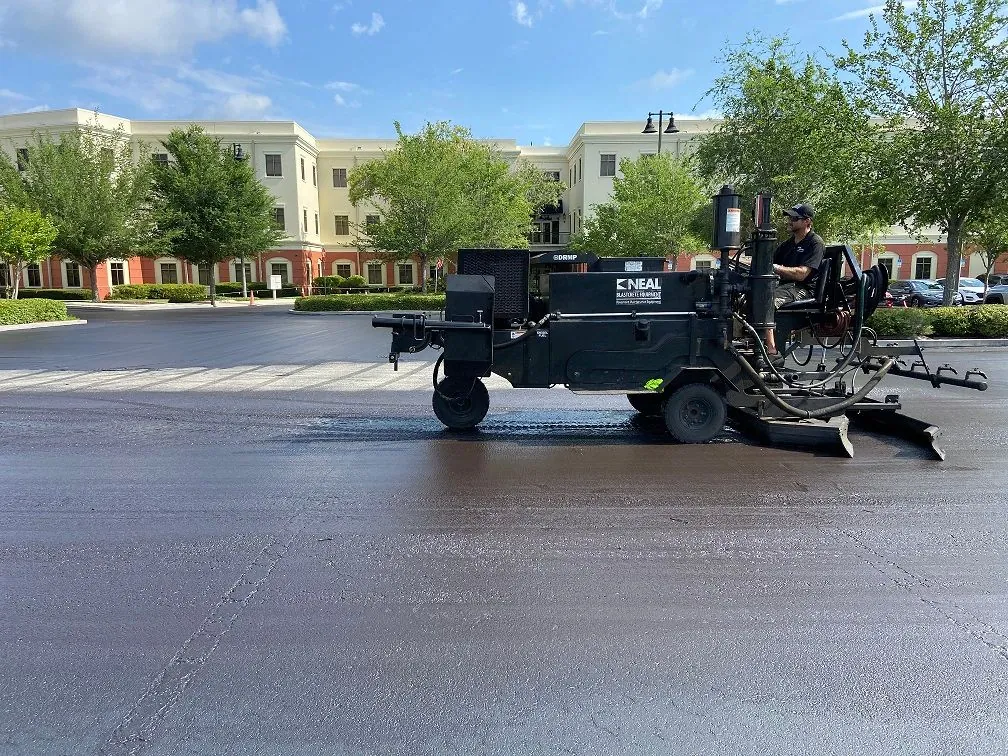
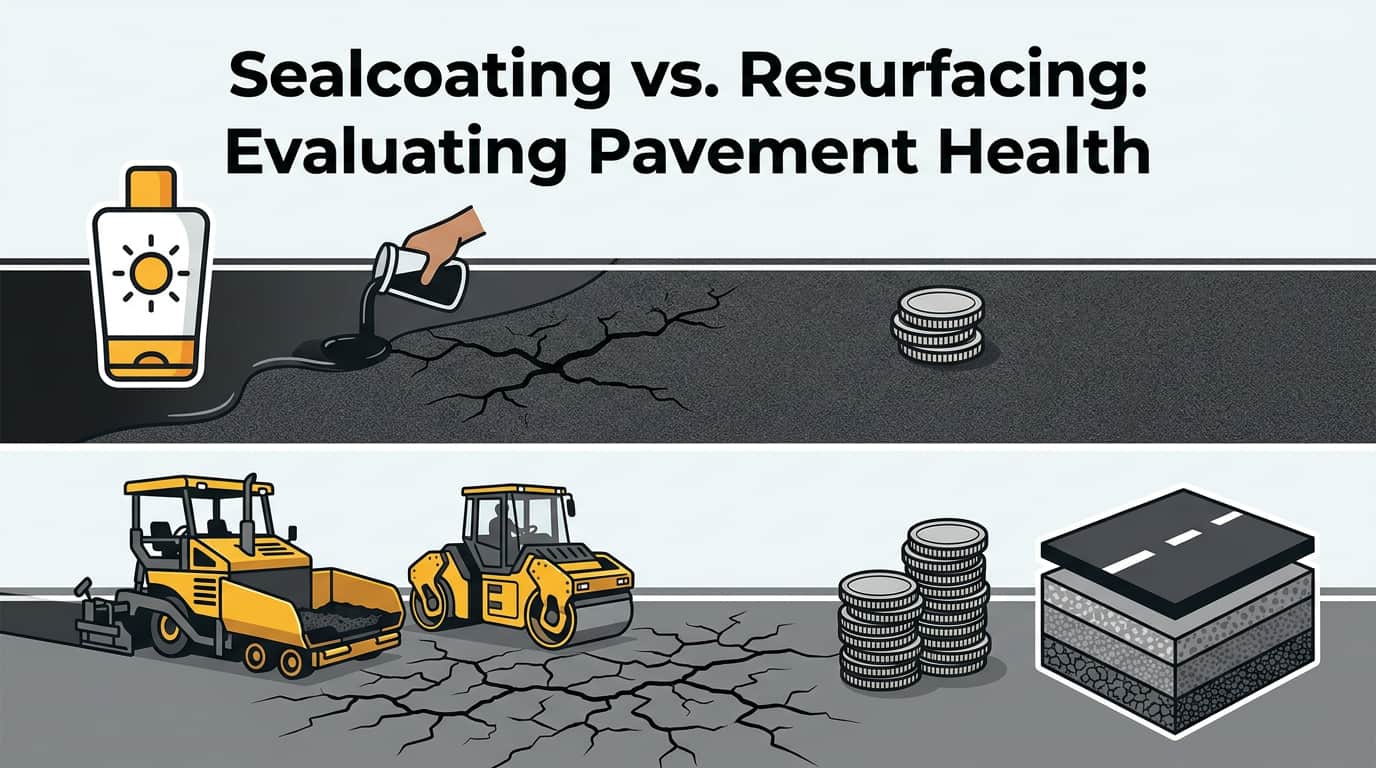
Sealcoating is a thin, protective coating applied directly over existing asphalt to shield it from UV rays, water penetration, oil spills, and oxidation. Think of it as sunscreen for your parking lot. It doesn't fix structural problems, but it prevents them from forming in the first place.
For asphalt paving in Orlando, Florida, sealcoating is typically the right move when your pavement is structurally sound but showing early signs of aging — fading color, minor surface cracks (under a quarter inch wide), or a rough, dry texture. The best time to apply it is every 2 to 4 years, starting 6 to 12 months after new asphalt is installed.
Cost-wise, commercial sealcoating runs $0.08 to $0.15 per square foot for larger lots. A 20,000 square foot parking lot might cost between $1,600 and $3,000 — a fraction of what resurfacing or full replacement would run. Properly maintained asphalt with regular sealcoating can last 25 to 30 years, compared to just 10 to 15 years without it. That's a lifespan difference of up to 300% for a relatively small annual investment.
You can learn more about the full process on the sealcoating service page.
Resurfacing — also called an asphalt overlay — involves applying a new layer of hot mix asphalt directly over the existing pavement. It's a structural repair option, not just a cosmetic one. Resurfacing addresses deeper surface deterioration that sealcoating simply can't fix.
Facility managers typically need resurfacing when there's widespread cracking across large sections of the lot, visible raveling (the surface breaking apart into loose aggregate), or sections that have begun to sink or shift. If your pavement is between 10 and 20 years old and shows these signs, resurfacing is almost always more cost-effective than full removal and replacement.
Asphalt overlay typically costs $3 to $5 per square foot for the Central Florida market. On that same 20,000 square foot lot, that's $60,000 to $100,000 — significantly more than sealcoating, but far less than a complete tear-out and rebuild. You can explore full asphalt paving and resurfacing options here.
Orlando's climate accelerates pavement deterioration faster than almost anywhere in the continental US. Summer temperatures regularly hit 90°F or above, combined with 70 to 80% humidity. From June through November, heavy afternoon rainstorms push water into any crack that's left unsealed. That water works its way beneath the surface, weakens the base, and turns a manageable repair into a full replacement job.
In our 20+ years serving Central Florida properties, we've seen this pattern consistently in areas like Dr. Phillips and Lake Nona: parking lots that skipped one sealcoating cycle looked fine going into summer but showed serious alligator cracking by October. The asphalt binder breaks down when it's exposed to UV radiation and moisture at the same time, and Florida delivers both in abundance.
That's why the timing of your maintenance schedule matters as much as the service itself. Sealcoating in the spring — before the rainy season starts — gives the surface time to cure fully and provides the best possible protection heading into the most damaging months.
Use this diagnostic framework before you make a decision. Walk your entire lot and look for the following:
Signs that sealcoating is the right choice:
Signs that resurfacing is needed:
Signs that full replacement may be unavoidable:
One thing that helps clarify the decision is understanding asphalt repairs as a spectrum. Surface-level protection like sealcoating keeps water and UV out of healthy pavement. Resurfacing replaces what's been lost at the top layer. Full replacement addresses base failure. Each step up that ladder roughly triples the cost, which is why catching problems early with regular sealcoating is the most financially sound approach for most facility managers.
For most commercial properties in Orlando doing asphalt paving in Orlando, Florida, a maintenance schedule looks something like this:
Properties in high-traffic areas, like shopping centers near the attractions corridor or industrial facilities in Sanford, may need to sealcoat every 2 years rather than every 3 to 4. Heavy truck traffic, fuel spills, and constant sun exposure all accelerate wear significantly.
In our experience serving over 8,000 customers across Central Florida, the properties that stick to a proactive schedule spend 40 to 60% less on asphalt over a 20-year period than those who wait until visible damage appears. The math is straightforward: a $2,000 sealcoat every 3 years adds up to roughly $13,000 over 20 years. Skipping it and resurfacing twice runs $120,000 or more on a mid-size commercial lot.
The right call between sealcoating and resurfacing depends entirely on the current condition of your pavement, your traffic volume, and how long you plan to hold the property. There's no universal answer — but there is a right answer for your specific situation.
Florida Sealcoating LLC has been protecting Central Florida pavement since 2000, with more than 20,000 projects completed across residential, commercial, and HOA properties. Our team provides free on-site assessments so you're never guessing about what your pavement actually needs.
Call (407) 942-3681 to schedule your free estimate. Same-week availability is offered for most properties in the Orlando area.
Get a free, no-obligation estimate for your asphalt project. Our team is ready to help protect and enhance your property.
(407) 942-3681