
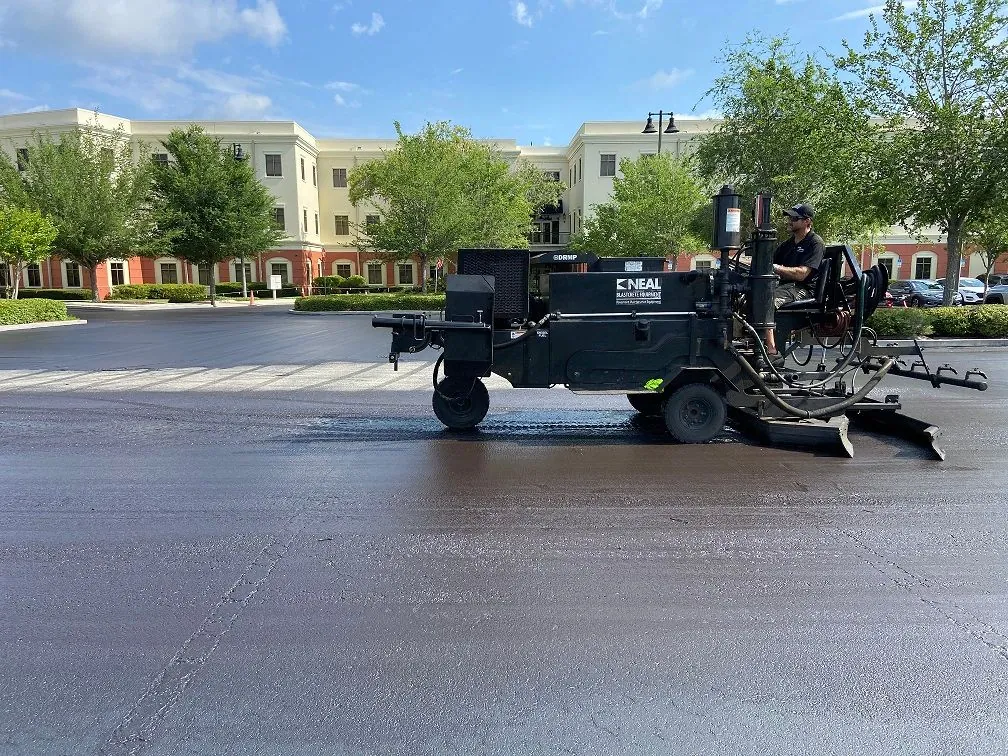
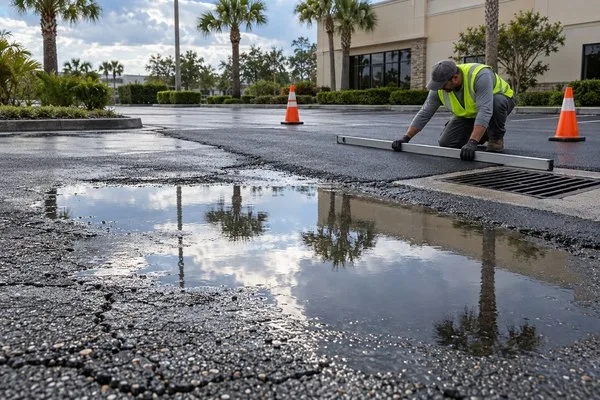
If puddles form in the same spots after every Daytona Beach storm, your lot is telling you something. Standing water is a warning sign that the slope or base underneath is failing, and proper paving and grading is what fixes it for good.
Patching the surface will not stop water from collecting there again. To get a lasting fix, contact our team or call (407) 942-3681.
How does a flat or failing slope trap water and damage the base?
A parking lot needs a gentle, continuous slope that moves water to drains or the edges. When the surface is too flat, or has settled into low spots, rain has nowhere to go and sits on the asphalt.
That water does not stay on top. It seeps through small cracks and joints into the base layer underneath, softening the material that holds the pavement up. Every car that drives over a wet, weakened base pushes the surface down a little further.
Over time, the low spot gets deeper and holds even more water. Daytona Beach's flat coastal terrain and heavy summer downpours make this cycle especially common on older lots.
Lots along International Speedway Boulevard see heavy traffic every day, which speeds up the damage. A low spot near an entrance or busy drive lane can go from a puddle to a pothole within a single rainy season.
How does ponding void warranties and speed up cracking?
Ponding water breaks down asphalt faster than almost anything else. And many paving and sealcoating warranties exclude damage caused by standing water or poor drainage, so the protection you paid for may not cover the problem.
Asphalt is held together by a binder that weakens when it stays wet. Standing water softens the surface, washes away fine material, and leaves the pavement brittle once it dries in the Florida sun.
Each wet and dry cycle widens existing cracks. Water gets in, the sun bakes the surface, and the cracks spread outward until they connect into alligator cracking, a sign the base is failing.
Sealcoating cannot fix a drainage problem either. Fresh sealer over a low spot will still hold water, and it often wears away fastest in those areas. Review your warranty terms and ask your contractor exactly what is excluded.
What does a proper grading and paving plan correct?
A proper plan corrects the slope so water flows where it should, repairs or rebuilds the weakened base, and paves a new surface that sheds water instead of holding it.
We had one property manager reach out because he finally wanted to fix a huge puddle that kept forming and basically took away two of his parking spots. When we looked at it, it was clear the paving and grading needed attention to keep that puddle from coming back.
The work starts with measuring the existing grades to find where water collects and why. Then the damaged area is excavated, the base is restored and compacted, and the new asphalt is laid at the right pitch toward drains or the lot edge.
Our asphalt paving service plans grading and drainage before the first load of asphalt arrives, so the fix lasts.
How can you spot drainage problems before you need a full replacement?
Walk your lot after a heavy rain and note where water sits for more than a few hours. Those are the areas to watch. Early warning signs include puddles that return in the same place, fine cracks around the edges of low spots, and areas where sealcoat wears away quickly.
Look for soft spots, dips in drive lanes, and cracks forming in a spiderweb pattern. Catching these early means the repair can stay targeted instead of turning into a full lot replacement.
Properties near the beach along A1A face salt air and frequent storms, so regular inspections pay off even more there. We provide asphalt and sealcoating in Daytona Beach for commercial lots of all sizes.
Stop patching the same puddle every season. Call Florida Sealcoating LLC at (407) 942-3681, or request a site assessment for a paving fix that lasts.