If you've lived in Florida for more than a year, you know the drill: summer doesn't just mean beach days, it means afternoon thunderstorms and the start of hurricane season. For homeowners needing asphalt repairs in Daytona Beach, FL, waiting until the first named storm forms is often too late.
In our years serving Volusia County, we've seen minor driveway cracks turn into massive potholes after just one week of heavy June rainfall. It's not just about curb appeal; it's about protecting your property from water damage that can cost thousands to fix later. Here is why tackling these repairs now, before the daily downpours begin, is the smartest move you can make for your home.
Daytona Beach averages over 50 inches of rain annually, with the bulk of it falling between June and September. During hurricane season, a single tropical system can dump 5 to 10 inches of water in 24 hours. That amount of water is the natural enemy of asphalt.
When asphalt is in good condition, it sheds water effectively. But once the surface is compromised, water becomes a destructive force. It seeps into small fissures, eroding the limestone base beneath your driveway. In Florida's sandy soil, this erosion happens fast. We often see driveways in neighborhoods like Indigo Lakes or Pelican Bay that look fine in May but develop alligator cracking or sinkholes by August because the base washed away during summer storms.
Think of a small crack in your driveway like a cavity in a tooth. It's annoying but manageable. Now imagine pouring water into that cavity every single day for four months. That's what happens to cracked asphalt during a Florida summer.
Fixing these issues now stops the cycle of water intrusion. By sealing cracks and patching potholes before the rains start, you preserve the structural integrity of the pavement. We've found that proactive maintenance costs about $0.25 to $0.50 per square foot, whereas full replacement—often required after severe water damage—can run $3.00 to $5.00 per square foot.
Ignoring driveway issues doesn't make them go away; it makes them more expensive. A small patch job might cost a few hundred dollars today. If you let water undermine the foundation during hurricane season, you could be looking at a total excavation and repaving job in the fall.
We see specific issues in Daytona Beach that are unique to our coastal environment.
This looks exactly like it sounds: a series of interconnected cracks resembling gator skin. It usually signals that the sub-base is failing. In areas near the Intracoastal or beachside, where the water table is higher, this is a frequent problem.
Because much of Volusia County sits on sandy, porous soil, washouts are common. If water gets under your asphalt through an unsealed crack, it carries the sand away with it. This creates a void, and eventually, the asphalt collapses into a pothole.
The Florida sun is brutal. UV rays dry out the liquid asphalt (the binder) that holds the rocks together. This makes the pavement brittle and gray. Once it's brittle, it cracks easily under the weight of a car.
The cost of asphalt repairs in Daytona Beach depends heavily on the extent of the damage, but knowing the numbers helps you budget.
For basic crack filling, you're typically looking at $1.00 to $3.00 per linear foot. If you need sealcoating to protect the surface, prices generally range from $0.20 to $0.40 per square foot. For an average 600-square-foot driveway, a sealcoating job might cost between $250 and $500.
However, if you have potholes that need cutting out and patching (a more intensive repair), costs rise to about $3.00 to $7.00 per square foot for the repaired area. Complete resurfacing or overlaying starts around $2.00 per square foot, while a full rip-out and replacement can exceed $5.00 per square foot.
Factors influencing your final quote include:
At Florida Sealcoating, we don't just dump hot mix in a hole and leave. We use methods designed to withstand our wet, hot climate.
We use a hot-applied rubberized sealant that remains flexible. This is critical in Florida because asphalt expands in the heat and contracts when rain cools it down. Rigid fillers just pop out after a few months.
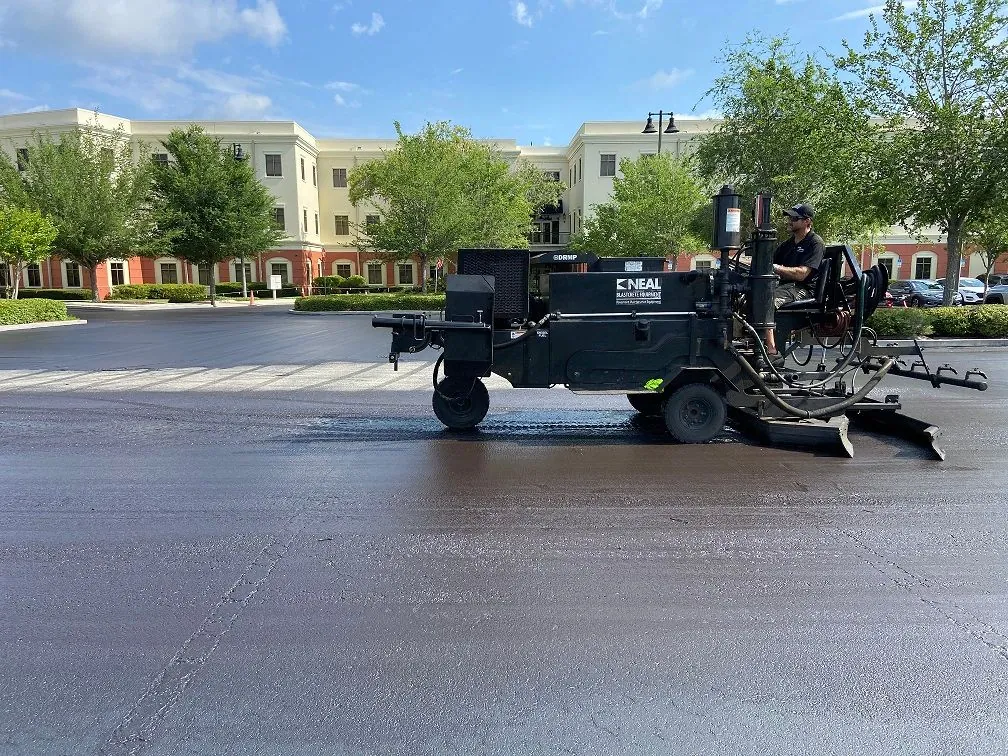
Our sealcoating mix includes sand and additives that provide traction (important when it's raining) and UV protection. It restores that rich, black look and acts as a sunscreen for your pavement.
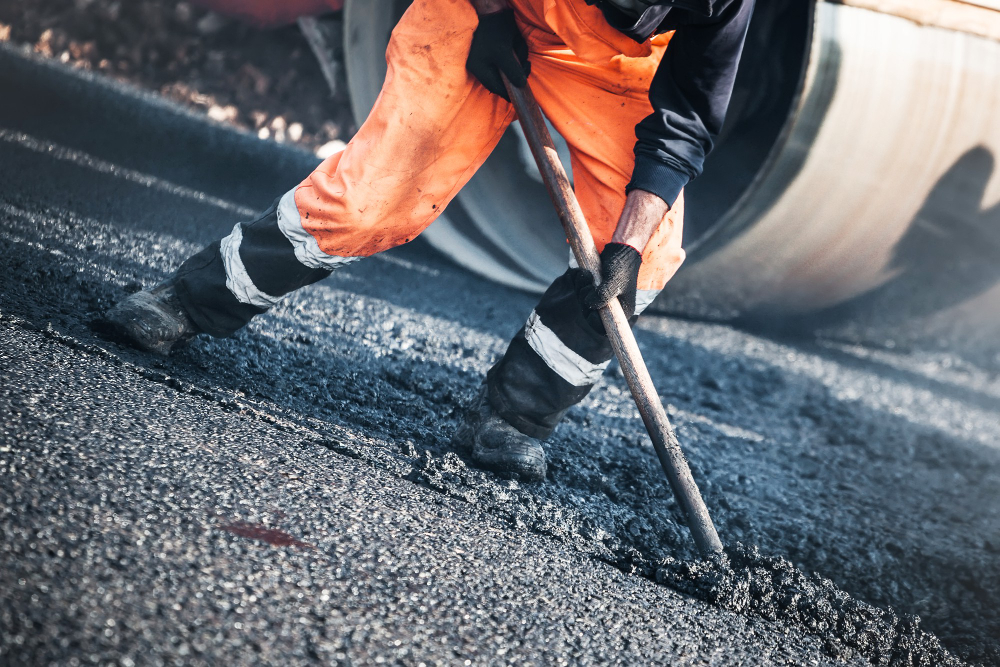
For potholes, we saw-cut the damaged area into a clean square, remove the failed material, compact the base, and install fresh, hot asphalt. This creates a seamless repair that lasts years, not weeks.
A crumbled driveway is a tripping hazard. We've heard from homeowners who had guests trip over a heave in the pavement or twist an ankle in a pothole. Keeping the surface smooth protects you, your family, and your visitors.
Your driveway is often the first thing people see. A well-maintained, black driveway makes the grass look greener and the house look cared for. Real estate agents in the Daytona area tell us that a freshly sealcoated driveway can increase perceived property value by up to 5%.
Not all contractors are created equal. In Daytona Beach, we unfortunately see "fly-by-night" operators who knock on doors claiming they have "leftover material" from a neighbor's job. Avoid these offers.
Look for a company with a physical address and verified reviews. Ask for proof of insurance and workers' compensation. At Florida Sealcoating, we've built our reputation on transparency. We provide written estimates detailing exactly what we'll do, from cleaning the surface to the specific type of sealer we use.
Check for local experience. A contractor who knows how to deal with the sandy soil in Ormond Beach or the drainage issues in Port Orange is invaluable. We know the local terrain and what it takes to make pavement last here.
Don't wait for the hurricane watch to be issued. Use this checklist to get your driveway ready now.
Summer storms are inevitable in Daytona Beach, but driveway damage isn't. You can save money and stress by addressing those small cracks and faded spots now. A secure, sealed driveway is one less thing to worry about when the wind starts blowing.
If you're ready to get your home ready for the season, we're here to help. Contact Florida Sealcoating today for a free assessment of your asphalt. Let's make sure your driveway can weather the storm.
Get a free, no-obligation estimate for your asphalt project. Our team is ready to help protect and enhance your property.
(407) 942-3681