
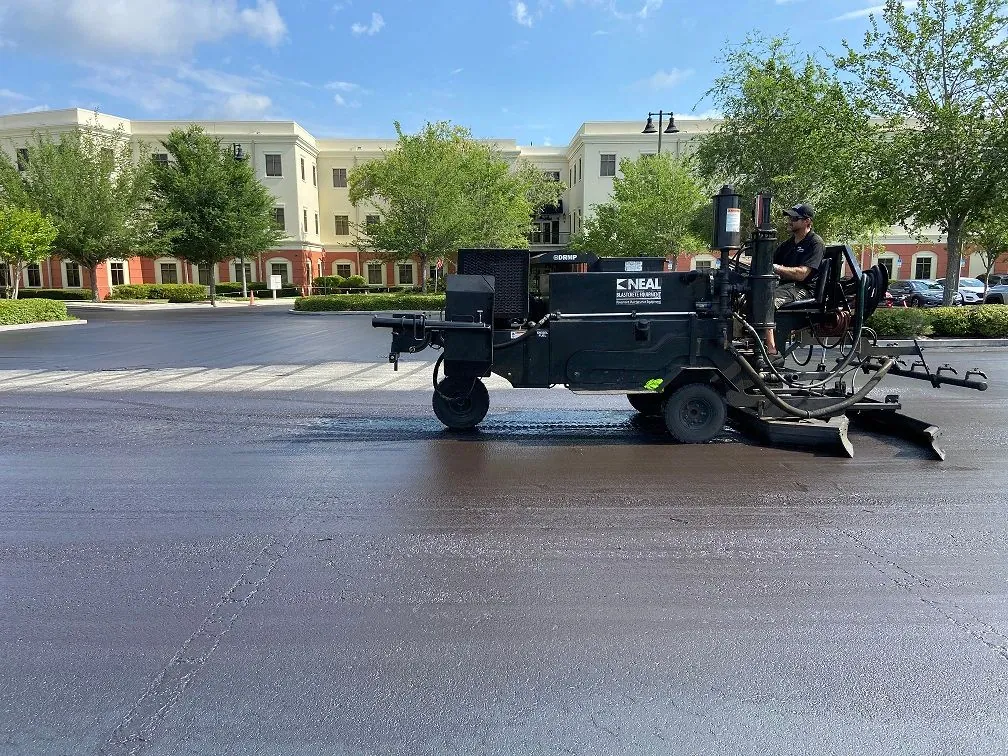
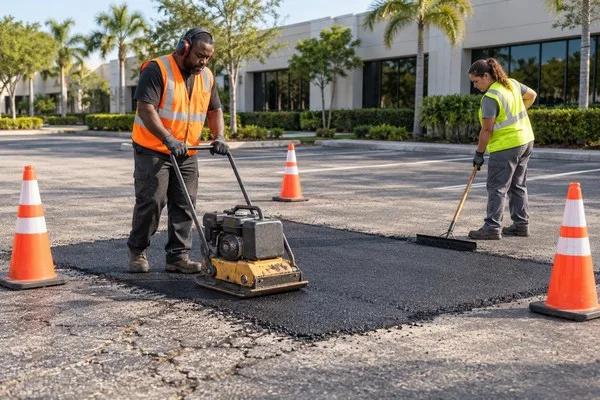
Raised edges, sunken patches, and spreading cracks are more than eyesores. On a commercial lot, they are trip-and-fall claims waiting to happen, and every month they go unrepaired adds to your risk.
Scheduling asphalt repairs before inspections and the busy season keeps hazards off your lot and documentation in your file. To book a walkthrough, contact our team or call (407) 942-3681.
Which asphalt defects most often lead to injury claims?
The defects that cause the most falls are the ones people do not see coming: potholes, raised or broken edges, sunken patches, and wide cracks along walkways and entrances. Uneven transitions between asphalt and curbs or sidewalks are common trouble spots too.
Location matters as much as size. A small dip in a far corner of the lot is a low priority. The same dip at a building entrance, crosswalk, or accessible parking space is a real hazard, because that is where people walk while looking at their phones, carrying bags, or guiding children.
Orlando's afternoon storms make it worse. Water hides potholes and soft spots, so a defect that looks obvious on a dry day becomes invisible in the rain. Wet asphalt around a raised edge is also more slippery, which raises the chance of a fall.
Busy retail centers along East Colonial Drive and hotel lots near International Drive see constant foot traffic from people unfamiliar with the property. Those visitors do not know where the bad spots are.
How do documented repairs help during inspections and insurance reviews?
Documented repairs show that you identified hazards and took action. Dated photos, work orders, and invoices create a clear record that the property is maintained on a schedule, not only after something goes wrong.
That record can matter during property inspections, lender reviews, and insurance renewals. It shows reviewers that problems are logged and addressed instead of ignored. A simple log with dates, locations, and before-and-after photos is often enough to make that case clearly.
It can also help if a claim is filed. While every case is different, a history of regular inspections and timely repairs is far stronger than having nothing on file. Talk with your insurer and legal advisor about the records they want you to keep.
Our commercial asphalt repair work includes clear documentation of what was fixed and when, so your file is ready when someone asks.
Why schedule asphalt repairs before the busy season?
Repairs scheduled ahead of the busy season are easier to plan, less disruptive, and often more affordable. When contractor calendars fill up, rush jobs and short-notice scheduling usually come at a premium.
Planning early also lets you choose when the work happens. You can schedule repairs during slower hours, on weekends, or in phases, so tenants and customers keep access to parking and entrances. Giving tenants advance notice also cuts down on complaints during the work.
Waiting has its own cost. Cracks that let water in during the rainy season can turn into potholes within weeks, and a small repair grows into a larger patch or full-depth replacement. Fixing it early keeps the cost and the disruption small.
For office parks in areas like Lake Nona or downtown Orlando, where tenants expect a polished, safe arrival, planning repairs ahead also protects tenant relationships and lease renewals.
How should you prioritize repairs across a large lot?
Start with walking routes and high-traffic areas, then move outward. Entrances, crosswalks, accessible parking spaces, and paths between parking and the building come first, because that is where people are most likely to trip.
One of our customers called us after she saw visitors stepping into the road to avoid a bad stretch of broken pavement near their entrance. We prioritized repairs along the walking routes, so people no longer had to risk stepping into traffic to reach the building.
After walking routes, focus on drive lanes and areas where water collects, since those defects spread fastest. Low-traffic corners and back lots can usually wait for a later phase.
We provide asphalt and sealcoating in Orlando and can help you build a repair plan that fits your budget and timeline.
Get hazards logged and fixed on a schedule. Call Florida Sealcoating LLC at (407) 942-3681, or book a walkthrough of your Orlando property today.