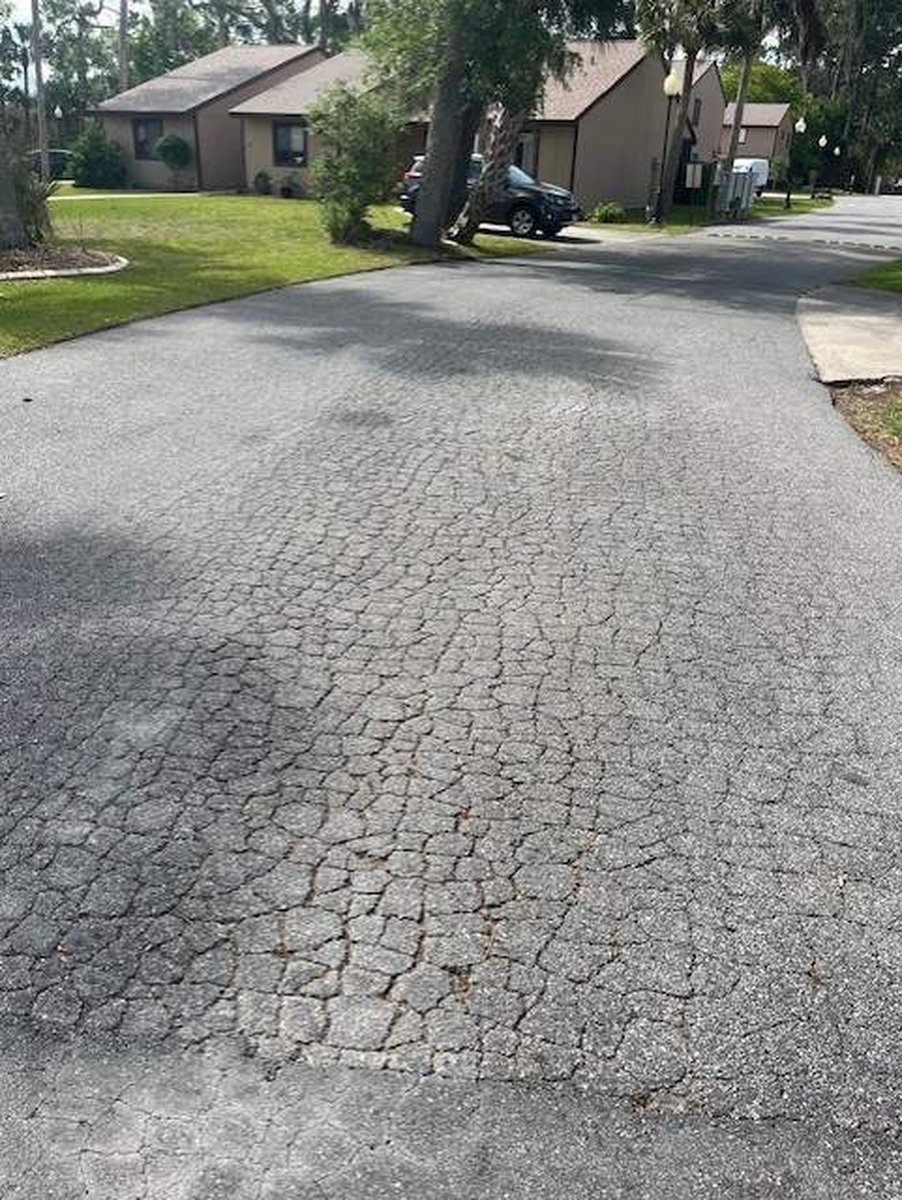
Alligator cracking is the web of interlocking cracks that spreads across a parking lot until the surface looks like the scales on a gator's back. It means the base under your asphalt is failing, and that will not fix itself on its own. If you have spotted this pattern on your Daytona Beach property, call us at (407) 942-3681 or reach out through our contact page so we can take a look before it spreads further. Florida Sealcoating handles asphalt paving and repair work across Volusia County, and we can usually tell you within one visit whether your lot needs a patch or a full repave.
Alligator cracking gets its name from the tight, interconnected pattern that looks like the scales on a gator's back, and it shows up when the base under the asphalt is failing rather than just the surface. Water is almost always the cause. It works into small cracks, sits under the pavement through Florida's rainy months, and slowly breaks down the compacted base that is supposed to carry the weight of every car and truck driving over it.
When we walk a lot like this, we look at where the water goes: which corners hold standing water after a storm, how the lot drains toward the street or a catch basin, and where the heaviest traffic lanes sit, since those spots fail first. Lots near Daytona International Speedway take this kind of wear fast, with thousands of vehicles crossing the same drive lanes on event weekends. That repeated load exposes a weak base much quicker than everyday parking would. Alligator cracking is a symptom, not the problem itself. The real issue sits underneath, and until that gets addressed, the cracks on top keep spreading no matter how many times you patch them.
It depends on how far the cracking has spread. A small, isolated patch of alligatoring can sometimes be cut out and rebuilt, but only if the base underneath that section is still sound, and we test for that before we promise anything. Once alligator cracking covers most of a lot, patching stops making sense, and milling out the old asphalt and repaving becomes the honest answer.
We see both situations on properties along International Speedway Boulevard, where retail centers and office lots take on a steady mix of daily traffic and seasonal spikes. Some only need one bad corner cut out and rebuilt because the rest of the base held up fine. Others have let it go long enough that the damage spread wall to wall, and a patch would just pour money onto pavement that will fail again within a year or two. That is why we do not quote a repair over the phone. We need to see how far the damage has traveled underneath the surface before we can tell you honestly whether asphalt paving and a full repave is what your lot needs or whether a targeted repair will hold.
Nothing about alligator cracking gets better with time. The cracks widen, more water works into the base with every rainstorm, and the failing section grows a little more each month until it swallows areas that were fine a year earlier. What could have been a contained repair, one bad corner cut out and rebuilt, turns into a full replacement, and the price climbs right along with it.
We have watched this play out at properties near One Daytona, where a small crack pattern near a drive lane or dumpster pad gets ignored through one rainy season and comes back twice as large the next. By the time a pothole opens up or a section starts to sink, you are usually looking at asphalt repairs that cost several times what the original patch would have run. Tenants notice cracked, uneven pavement too, and it does not help your property when a customer or delivery driver has to dodge broken asphalt to reach your door. The lot you ignore this year is rarely the same size problem next year. It is bigger, and it costs more to fix.
You get an honest assessment by having someone look underneath the surface, past the cracks you can actually see. We start by reading how water moves across your lot, where it pools, where it drains, and how your catch basins are handling it, since drainage problems are almost always part of the story. Where we suspect the base has failed, we cut a few test spots and see what is actually happening down there before we recommend anything.
That step protects you both ways. You should not pay to repave a lot that only needed one section fixed, and you should not settle for a patch on a lot that genuinely needs milling and repaving to hold up long term. Small alligator cracks caught early, before they reach the base, can sometimes be handled with crack sealing instead of a full repair, saving you money if you catch it in time. If you are looking at cracked pavement on your Daytona Beach property and cannot tell which side of that line you are on, give us a call at (407) 942-3681, or send us a note through our contact page, and we will walk the lot with you and lay out your options plainly.
Get a free, no-obligation estimate for your asphalt project. Our team is ready to help protect and enhance your property.
(407) 942-3681