
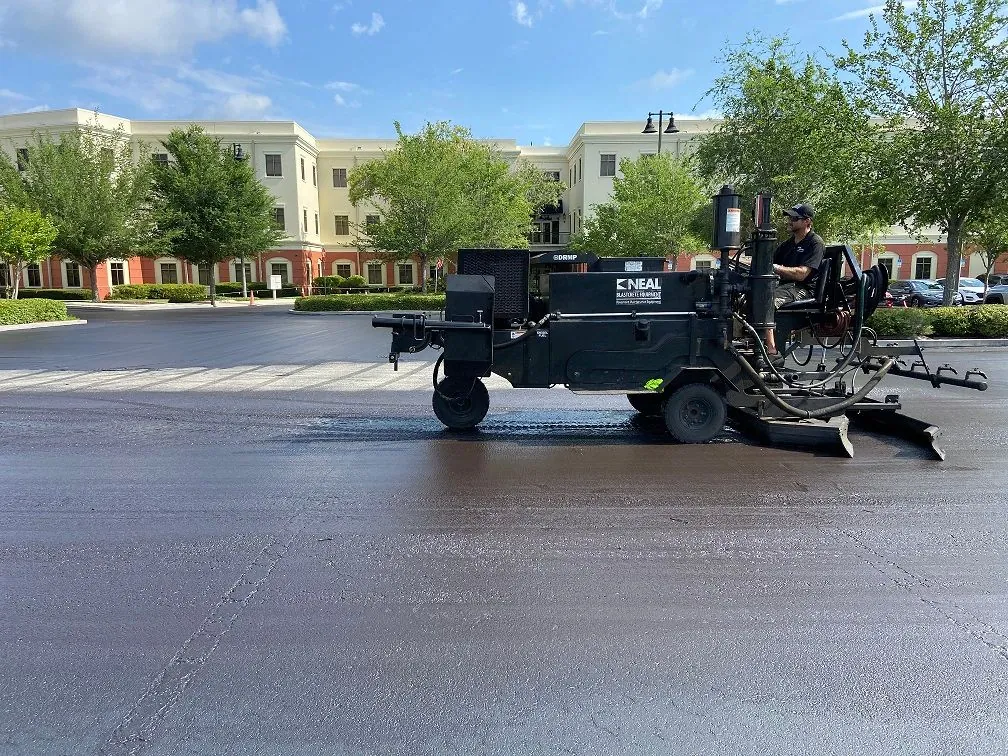
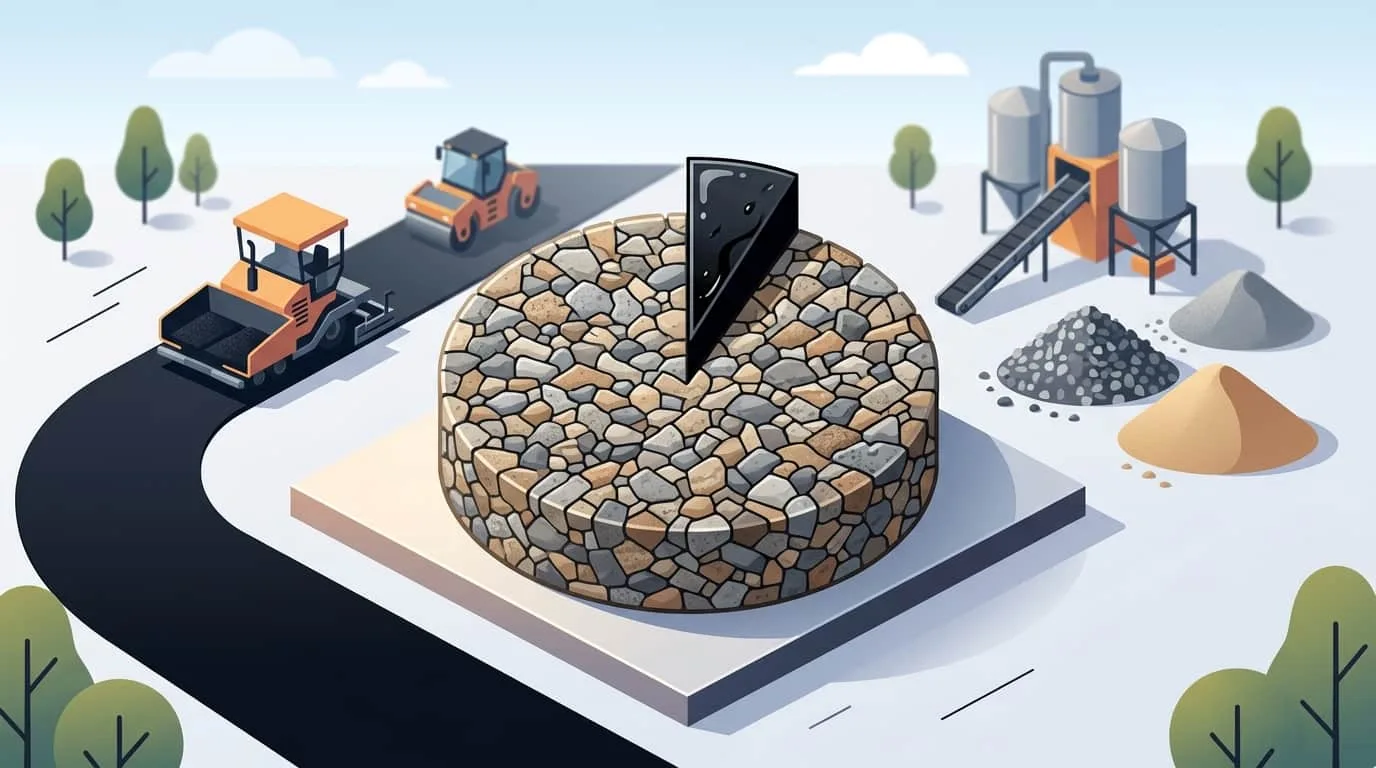
Asphalt is made of approximately 95% aggregates (crushed stone, gravel, and sand) and 5% bitumen (a sticky petroleum binder). In Central Florida, specialized additives and polymers are mixed in to help the pavement resist temperatures exceeding 90°F and heavy seasonal rain.
Most commercial property managers look at their parking lot and just see blacktop. You rely on it every day. Understanding exactly what is asphalt made of helps you make smarter maintenance decisions. Need help with your pavement right now? Contact Florida Sealcoating LLC at (407) 942-3681.
In our 20+ years serving Central Florida, we've learned that knowing the science behind your pavement saves you thousands of dollars in premature repairs.
What Are the Core Components of Asphalt?
Asphalt contains three main components: aggregates, bitumen, and fillers. Aggregates provide the structural strength and make up 90% to 95% of the total mix. Bitumen acts as the glue that holds these rocks together. Mineral fillers eliminate small air voids to create a dense, waterproof surface.
How Bitumen Acts as the Binder
Bitumen is the thick, black petroleum product that gives asphalt its dark color. Engineers refine crude oil to extract this sticky substance. It provides waterproofing and flexibility. Florida's intense heat requires a specific grade of bitumen. Standard binders get too soft in our climate. Paving experts use polymer-modified bitumen to keep your commercial parking lot stiff and stable even when surface temperatures skyrocket.
Why Aggregates Form the Pavement Backbone
Aggregates bear the weight of cars and delivery trucks. Quarries supply crushed stone, sand, and gravel. The size and shape of these rocks dictate the strength of the final surface. Angular stones lock together tightly. Round stones tend to shift under heavy loads.
Consider this micro-case study on Daytona Beach summer heat. Asphalt surface temperatures can reach 150°F on a hot August afternoon near the Speedway. To survive this blistering environment without melting or shifting, engineers adjust the aggregate-to-bitumen ratio. A standard residential mix might use 5.5% bitumen. For high-heat, heavy-traffic commercial areas in Daytona Beach, experts reduce the binder slightly to 4.8%. They combine this with larger, highly angular crushed stone. The interlocking rocks bear the physical load. The stiffer binder simply holds them in place. This exact science prevents the asphalt from rutting.
How Fillers and RAP Enhance the Mix
Mineral fillers like limestone dust fill the microscopic gaps between larger stones. This keeps water out. Modern asphalt plants also incorporate reclaimed asphalt pavement (RAP). This recycled material makes up 15% to 30% of many new mixes. It provides an eco-friendly way to build strong roads while keeping costs down.
How Do Asphalt Plants Manufacture the Mix?
Asphalt plants manufacture the mix by heating aggregates to 300°F and blending them with liquid bitumen. Drum mix plants produce continuous batches for large commercial projects. Batch plants create specific mix designs for specialized jobs. The resulting hot mix must stay above 275°F during installation.
If the mix cools down too much before the rollers compact it, the pavement fails prematurely. This is why hiring an experienced team for Asphalt Paving is critical. Proper temperature control ensures a smooth, durable finish.
Which Asphalt Mixes Work Best in Florida?
Hot Mix Asphalt (HMA) works best for most commercial parking lots in Florida because it offers high durability. Warm Mix Asphalt (WMA) requires less energy to produce and works well in cooler months. Porous asphalt allows water to drain through the surface to manage heavy summer rainstorms.
You'll see newer commercial developments in Lake Nona using advanced mixes to handle high traffic and strict stormwater regulations. Knowing what is asphalt made of helps contractors choose the exact right mix for these specific local conditions.
Why Does Pavement Performance Matter for Commercial Lots?
Pavement performance directly affects your commercial property's safety and maintenance budget. High-quality asphalt lasts 20 to 25 years with proper care. Poorly mixed asphalt develops cracks and potholes within 5 to 7 years.
Our technicians typically find that proactive maintenance doubles the lifespan of a parking lot. Applying professional Sealcoating every 2 to 4 years protects the bitumen from UV rays and oil spills. If you manage properties north of Orlando, relying on experts for asphalt and sealcoating in Sanford ensures your lot meets local Seminole County code requirements.
The Bottom Line on Paving Science
You don't have to be a material scientist to manage your commercial property. You just need a basic understanding of what is asphalt made of and a reliable contractor. Florida Sealcoating LLC provides the expertise and quality materials your pavement needs to survive Florida's harsh climate. Ready to protect your investment? Contact Florida Sealcoating LLC at (407) 942-3681.