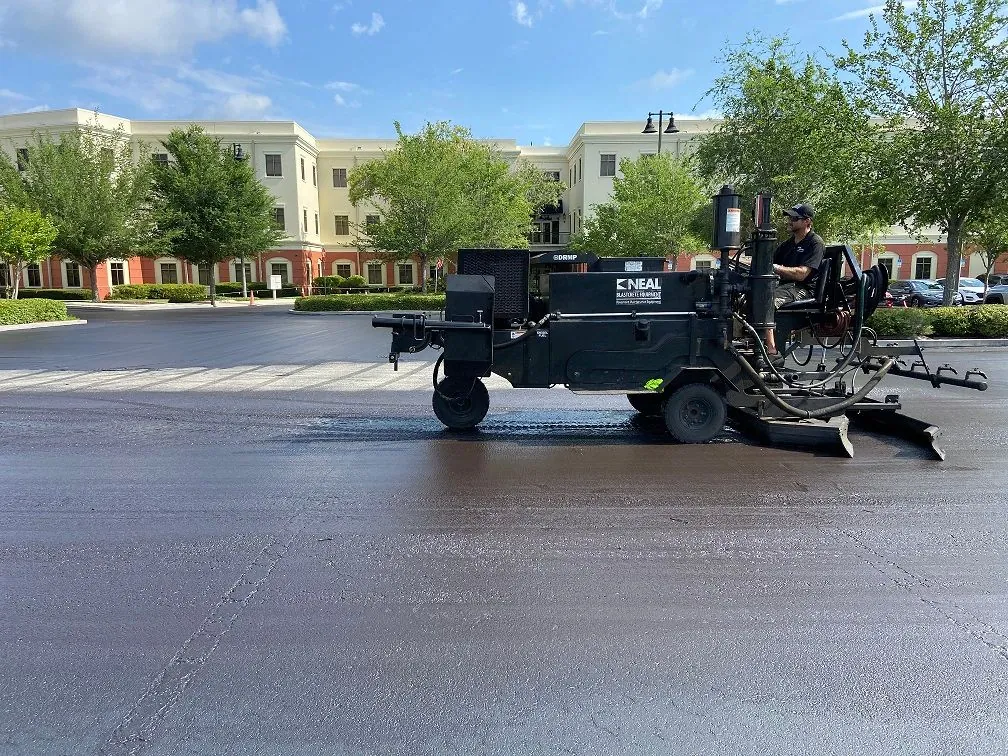
What makes an asphalt repair last in Daytona Beach comes down to three things: the shape the base is in, how well the crew compacts the asphalt, and whether the patch gets enough time to cure before trucks and cars start driving on it. The sealer or the patch mix itself is rarely what decides whether asphalt repairs hold up. If your lot has a patch that is sinking, cracking, or breaking apart at the edges, Florida Sealcoating has seen why, and we can tell you what it will take to fix it right. Call (407) 942-3681 or reach out through our contact page to get a straight answer instead of guesswork.
Why do some asphalt patches last years and others fail in months? It almost always traces back to what is under the surface, not what is on top of it. A patch installed over a base that is already breaking down will crack again within a season, no matter how good the asphalt mix is. Before we patch anything, we walk the lot and look at how water moves across it, where it pools, and whether the catch basins are actually doing their job, because water sitting on or soaking into a weak base is the single biggest reason repairs fail early. Downtown near Beach Street, we see this play out often: lots that flood during afternoon storms because the drainage problem was never fixed, only patched over and over. A patch is only as strong as what is holding it up. If the base has failed, the surface fix is temporary no matter what material goes down. That is why we spend more time diagnosing the ground under a bad patch than talking about which sealcoat or asphalt blend to use.
What makes a patch hold up under heavy traffic comes down to compaction and time. Asphalt that is properly compacted resists rutting and cracking under repeated weight, and giving it a day or two to cure before heavy vehicles roll over it matters more than most property owners realize. Along corridors like Atlantic Avenue, where delivery trucks and beach traffic pound the pavement all summer, a rushed patch shows wear within weeks. We learned how much cure time matters on a large patching job at a distribution center in Jacksonville, in the area where semi trucks load and turn all day. We went in with low expectations given the weight and the constant turning, but that patch is still holding up seven years later. Three things made the difference: the base underneath was in good shape and needed only minor repair, we got solid compaction on the asphalt, and we insisted on an extra day or two of cure time before semis were allowed back on it. That is the same standard we apply to asphalt repairs on commercial lots here, and it is why asphalt paving projects that skip cure time almost always come back to bite the owner within a year.
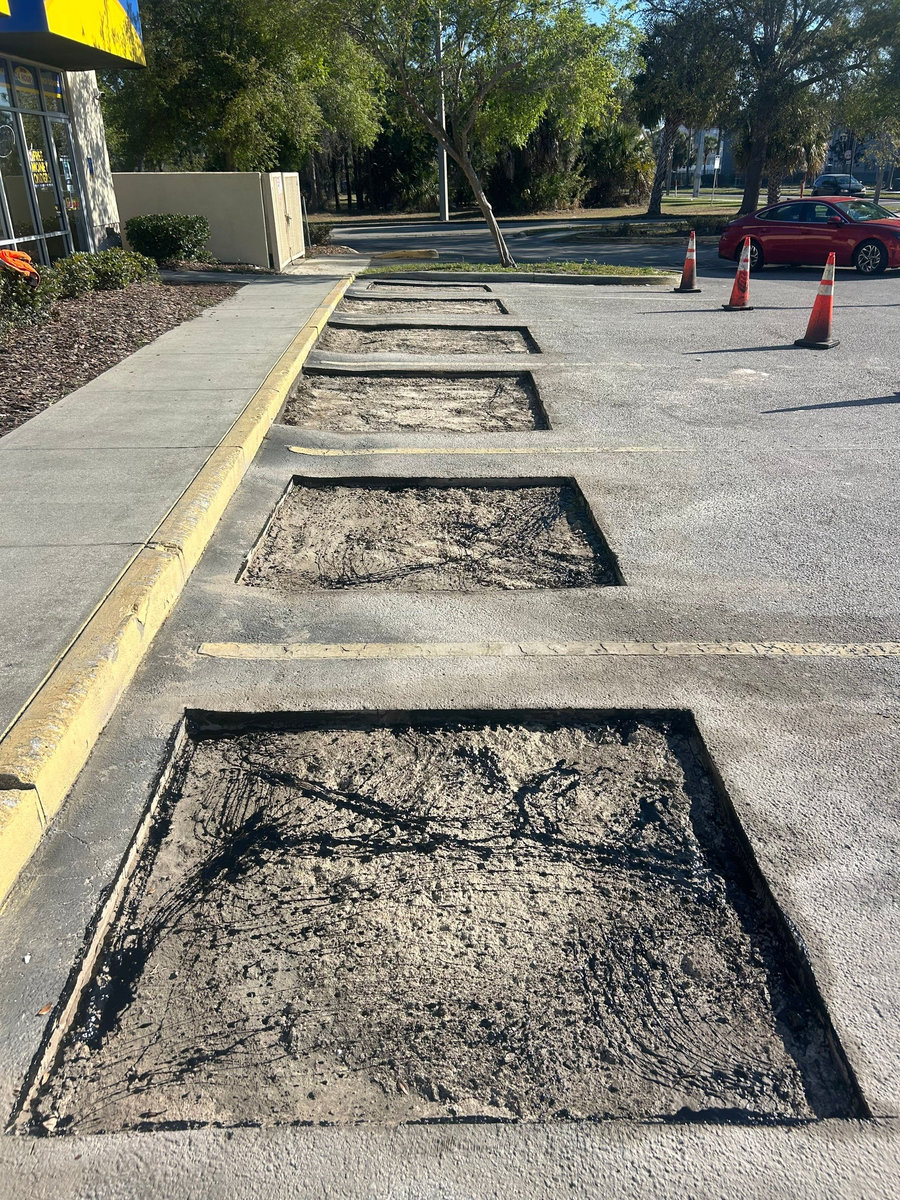
Why do some patches fail so fast is usually a story about a shortcut somebody took to save money upfront. We have seen it happen on a small lot where the base was already in questionable shape and the owner did not want to pay to fix it before patching. The edges of that patch sat on sand with nothing solid underneath to support them, so within months the asphalt sank, the edges unraveled, and chunks started breaking away. Near the Daytona Beach Boardwalk, where foot traffic and beach visitors put constant pressure on nearby lots, a patch like that would not survive a single busy season. Skipping base repair is the most common reason a patch fails fast, followed closely by asphalt that never got properly compacted or was driven on before it had time to set. A commercial asphalt repair that looks fine the day it is finished can still fail within weeks if any of those steps got rushed. That is the gap between a patch that looks done and one that is actually done right.
How do you make sure your repair is done right? Insist that the contractor repairs the base wherever it is bad instead of patching over it, confirm the asphalt gets properly compacted, and make sure the lot gets real cure time before heavy vehicles are allowed back on it. A contractor who skips the base to save a little money on the front end is handing you asphalt repairs that will not last, no matter how good the surface looks on installation day. Ask what they found when they assessed the base, ask how they plan to handle drainage and water flow, and ask how long the patch needs to cure before you can reopen that section of the lot. Those questions tell you more about the outcome than the price on the estimate. If you want a straight answer about what your lot actually needs, call Florida Sealcoating at (407) 942-3681 or request a walkthrough through our contact page, and we will tell you what we see, no pressure either way.
Get a free, no-obligation estimate for your asphalt project. Our team is ready to help protect and enhance your property.
(407) 942-3681