A pothole keeps coming back because whatever caused it never got fixed. Filling the hole is a bandage, not a repair, and the spot breaks open again within a season or two. That's the pattern we see on commercial lots across Sanford more than almost anything else, and it usually means the earlier repair only touched the surface. Florida Sealcoating handles asphalt repairs on properties throughout Central Florida, and Sanford lots take a beating from summer storms and heavy delivery traffic. Call us at (407) 942-3681 or reach out through our contact page, and we'll look at what's actually happening under that hole before you pay to patch it again.
The hole reopens because the patch was never load bearing to begin with. Filling a pothole with cold patch or even hot mix without dealing with what's under it just resets the clock, and the clock runs fast on a lot with regular truck and car traffic. We see this constantly along corridors like Rinehart Road, where plazas and office parks take a steady stream of delivery trucks and daily parking turnover. A quick patch there might hold for a few weeks before the edges start to crumble again. Two things usually cause a pothole to come back no matter how many times it's filled. The base under the asphalt has failed, or oil has soaked into the surface and softened it from the top down. Neither one gets solved by dumping more asphalt into the hole. Until we know which one we're dealing with, and often it's both, any patch is going to be temporary no matter how good it looks the day it's poured. That kind of recurring failure is exactly what commercial asphalt repair is meant to solve, tracing the problem back to why it started instead of covering it up again.
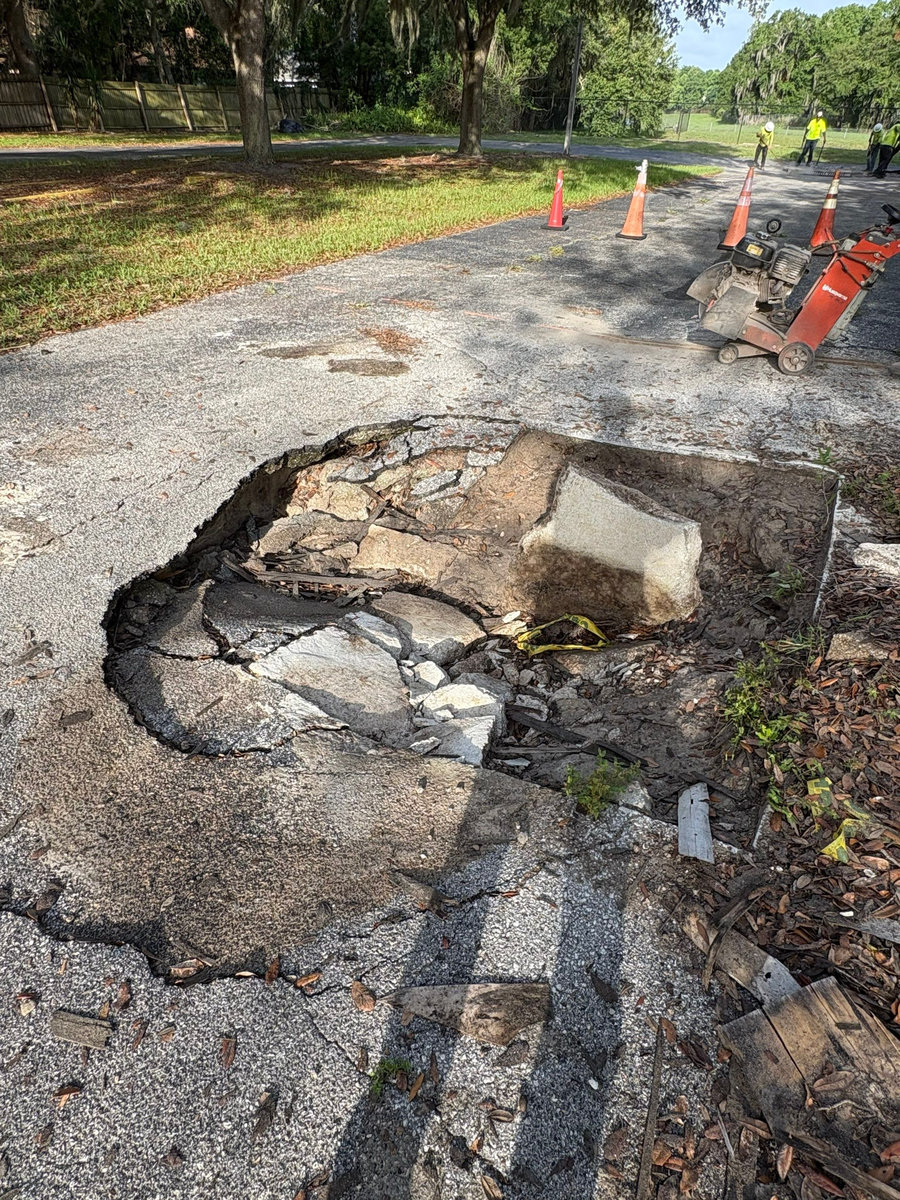
Under a pothole that keeps failing, you'll usually find one of two things. Either the base has broken down, or the asphalt was laid over sand with no real base underneath it at all. Older lots near Orlando Sanford International Airport were sometimes built this way, thin asphalt over a sand base, and it held up fine for years until traffic and water finally caught up with it. Once that base starts to go, the edges of the hole unravel a little more with every pass of a car, and a surface patch just sinks into the soft spot and breaks away again. Oil penetration works differently but ends at the same place. Gas, oil, and hydraulic fluid soften asphalt from the top down, breaking the binder apart until the surface crumbles under normal weight. A pothole caused by oil can look small on top and still be soft and weak for a foot around it. Neither problem gets fixed by a fresh layer of patch. The base has to be repaired and properly compacted first, or whatever we pour on top is only there until the next hard rain.
Florida weather turns a small pothole into a big one faster than most property owners expect. By the time we get a call about a pothole, it's usually already a real problem, not a hairline crack or a small dip. Summer is the worst stretch. Heavy rain works into any crack in the surface, and daily traffic keeps pounding that softened spot until it caves in. We've seen it happen on lots near Historic Downtown Sanford in a matter of weeks during a wet summer, where a lot that looked fine in June needed a real repair by August. Once water gets under the asphalt and the base starts to soften, the damage moves fast. There's no slow decline you can plan around. A rough spot in a parking space today can be a hole your customers are swerving around in two or three weeks. That's why we tell property managers not to wait once they notice standing water pooling in the same spot after every storm. It's a sign the base underneath is already taking on water, and it needs attention before it turns into a hole that catches a shopping cart wheel or a customer's tire.
Fixing a pothole for good means fixing the base first. We excavate down to solid material, rebuild the base where it failed, and compact it properly before any new asphalt goes in. Skip that step and you're paying to have the same pothole reappear next year. Compaction matters as much as the materials themselves, since a patch poured over loose or wet material never bonds the way it should, no matter how hot the mix is going down. If we could fix only one thing on a lot first, it would be potholes caused by base failure or oil damage, because those spread faster than anything else. A crack can wait a season. A failing base under a pothole usually can't. Real asphalt repairs start with understanding why the surface failed in the first place. Covering the hole without fixing that is only a temporary fix. If a spot in your Sanford lot keeps coming back no matter how many times it's filled, call us at (407) 942-3681 and let's walk the property together. We'll tell you honestly whether it's a quick fix or something that needs to be dug out and rebuilt. Reach out through our contact page whenever it's convenient and we'll get something scheduled.
Get a free, no-obligation estimate for your asphalt project. Our team is ready to help protect and enhance your property.
(407) 942-3681