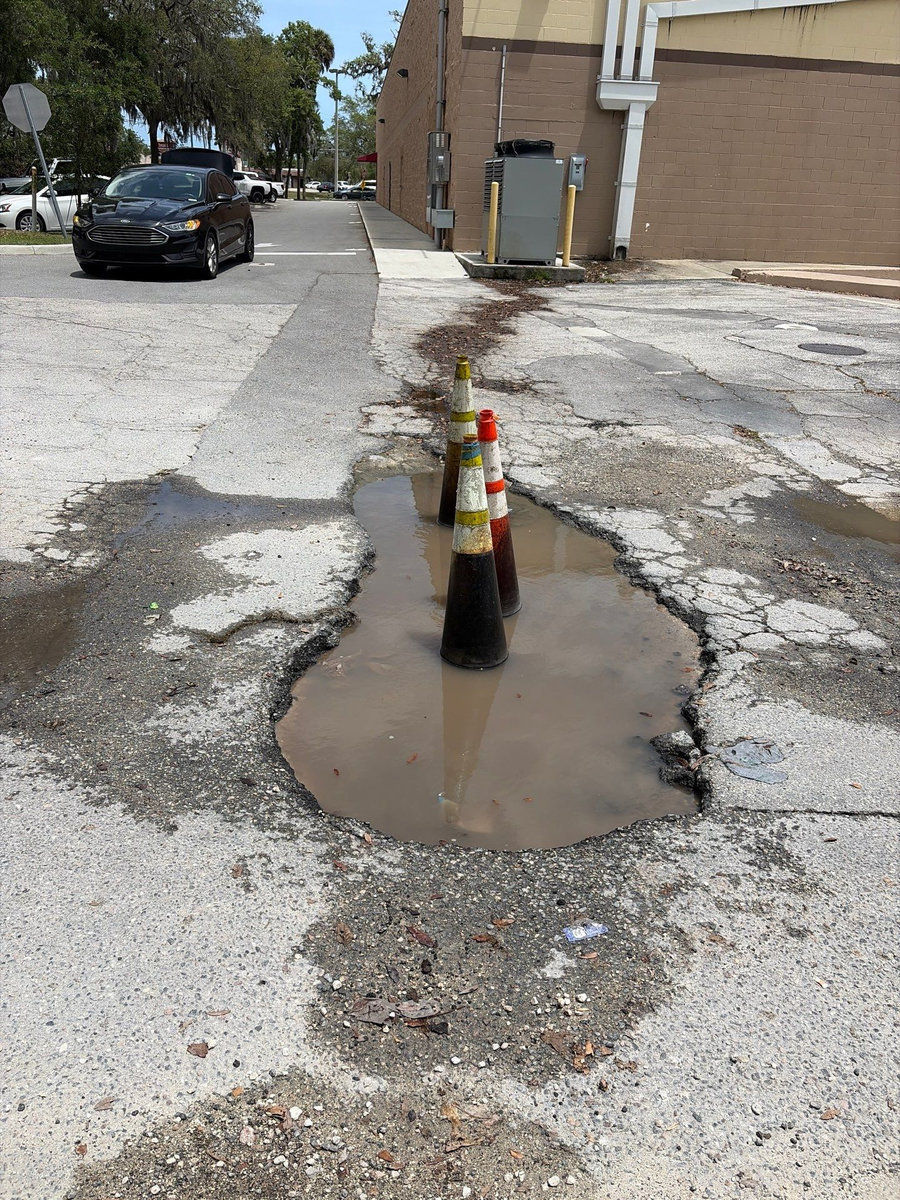
Standing water in your parking lot after a storm is a warning, not a small thing to ignore. It means water is doing exactly what your asphalt is designed to keep out, and water penetration is the single biggest cause of pavement failure in Florida. If puddles sit in the same low spots after every storm, your lot is telling you something before it turns into a full repave. Florida Sealcoating has walked lots like this across Orlando for years. Call us at (407) 942-3681 or get in touch through our contact page and we will take a look before rainy season does more damage.
Standing water means your lot has lost its ability to shed rain the way it was built to. Asphalt should carry water off the surface and into the drains within minutes of a storm ending, not hold it for hours. When we walk a lot for the first time, we watch how water actually moves. We look at traffic patterns, low spots worn in by delivery trucks, the slope toward catch basins, and whether water pools against curbs or builds up where the pavement meets a curb line. On retail properties near the Mall at Millenia area, we see this constantly in the outer rows of parking, the sections farthest from the entrance that get restriped less often and take the brunt of runoff from the rest of the lot. That pooling water does not sit quietly. It works into every crack and edge it can find, seeps into the base material underneath, and starts a slow process of base failure that shows up later as sinking, alligator cracking, or a full pothole. By the time you can see damage on top, the base has usually been compromised for a while.
Florida rain turns a small drainage problem into a big one fast. Our summer storms do not sprinkle, they dump inches of water in under an hour, and that saturates the ground before it has a chance to drain. Once the surface is already compromised, whether from an old seal coat that has worn thin or a base that is starting to soften, heavy rain plus daily traffic speeds everything up. We have watched a hairline crack in a low spot near a busy corridor turn into a real pothole within a few weeks during a wet stretch of June or July. Properties around Orlando International Airport deal with this kind of pressure constantly, with heavy trucks, shuttle buses, and rental car traffic rolling over lots that see near daily rain for months. That much weight combined with that much rain is hard on asphalt over time. A problem that would take a year to develop in a drier climate can show up in a single rainy season here. That is why we tell property managers not to wait until fall to deal with a spot that has been holding water since May. The pavement works against you every day that puddle sits there.
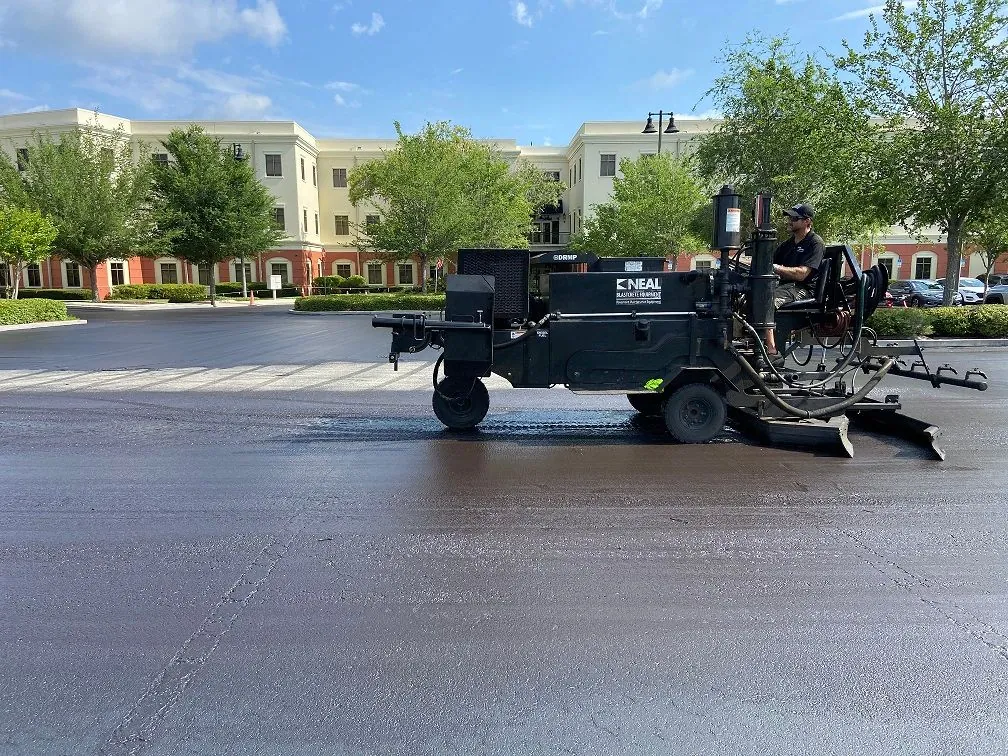
Yes, sealcoating protects your lot, but only when it is done for the right reasons and in the right order. Sealcoating, also called asphalt sealing, puts a protective layer over your asphalt that blocks water penetration and slows the oxidation that makes pavement brittle and gray. We install a lot of it on properties along International Drive, where lots see constant tourist and delivery traffic and cannot afford to close for major repairs. Here is the part we stay honest about: sealcoat is a surface coating, not a filler. If your lot already has cracks, sealcoating over them does not solve anything, water will still find its way underneath and keep working on the base. That is why we handle crack sealing before we sealcoat wherever it is needed, so the cracks are closed off before we put a protective coat over the surface. Think of sealcoating as prevention for a lot that is still sound, not a repair for damage that already happened. Skip that order and you are putting a nice looking layer over a problem that is still growing underneath it.
If a spot on your lot never drains, get it looked at before the base underneath gives out. Puddles that hold in the same place after every storm usually mean the grading is off or there is a low area pulling water in and holding it there, and that is not something that fixes itself. We check for this on every lot we assess, because it is one of the clearest signs of trouble waiting to happen. Left alone, a spot like that keeps getting worse every time it rains until you are looking at a full asphalt repairs job or a section that needs to be milled and repaved instead of a simple fix. Catching it early is always the cheaper path. A grading correction or a patch handled now costs a fraction of what it costs to redo an entire section of pavement later. We would rather walk your lot, point out where the water is going and why, and give you options while it is still a small problem. If you have a spot that stays wet long after the rain stops, call us at (407) 942-3681 or reach out anytime through our contact page and we are happy to take a look and talk through what needs to happen next.
Get a free, no-obligation estimate for your asphalt project. Our team is ready to help protect and enhance your property.
(407) 942-3681