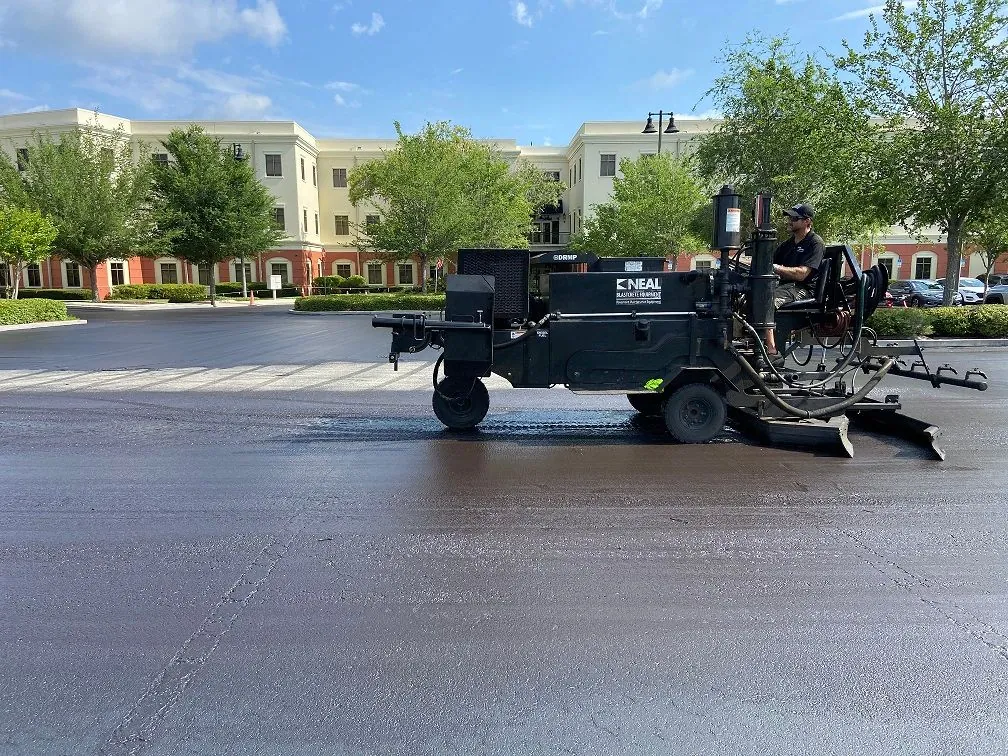
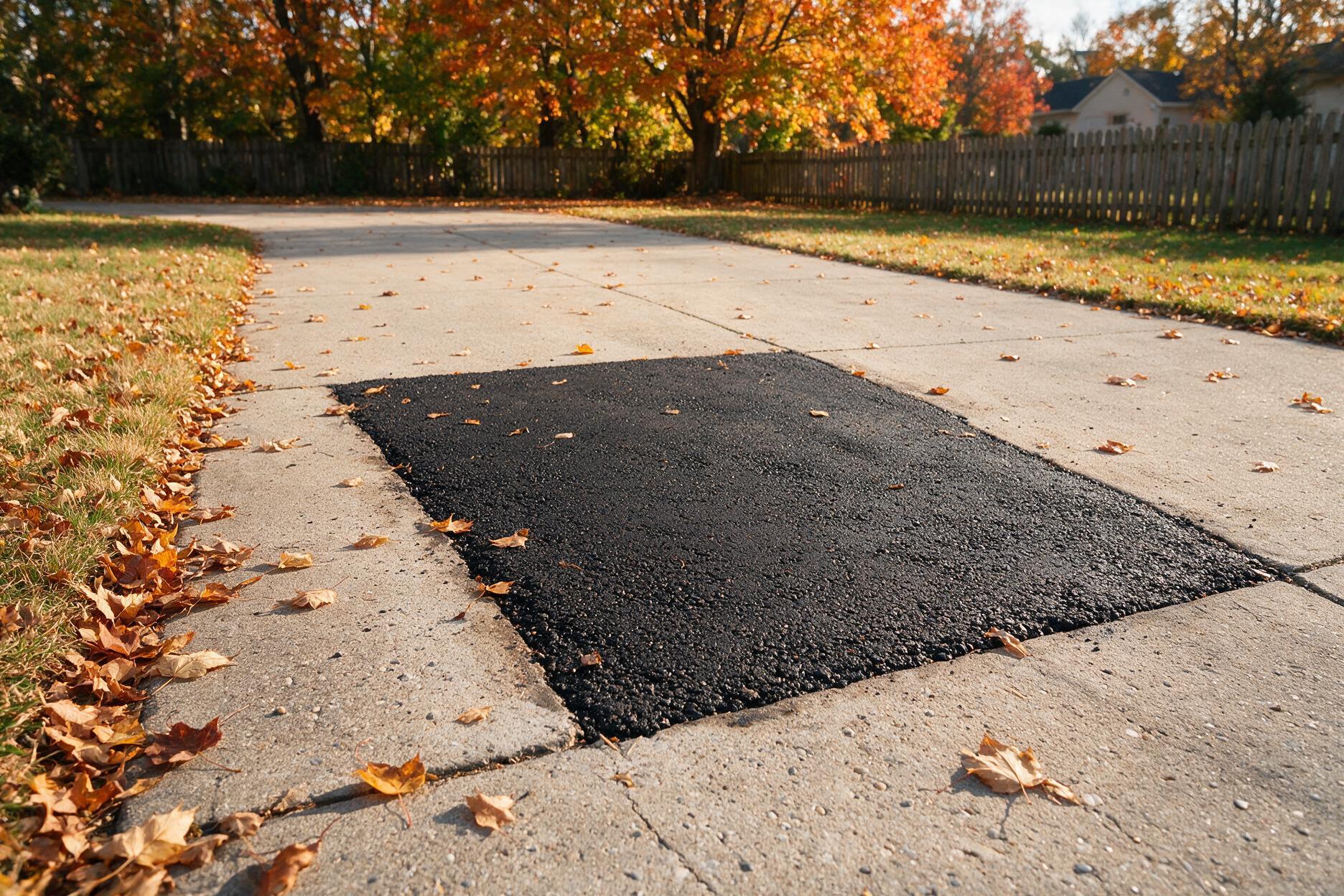
One large patch usually beats several small ones because doing the saw cutting, the prep, and the pour a single time costs less than repeating those steps four or five times, and it leaves you with a stronger, better looking lot. If your Sanford property has scattered potholes or a patch that keeps failing, solid asphalt repairs often mean combining that damage into one section instead of chasing each spot on its own. Call us at (407) 942-3681 or send details through our contact page for a straight read on your lot. Florida Sealcoating has repaired commercial lots across Central Florida long enough to know when one bigger patch is the smarter call.
One large patch often costs less than several small ones because every extra patch means another round of saw cutting, another delivery of hot mix, and another crew setup. Small patches multiply the labor without multiplying the coverage much at all. When we walk a lot near Lake Monroe and see three or four soft spots scattered across the same drive aisle, we usually recommend combining them into a single cut instead of boxing out each one separately. A crew that saws, excavates, and compacts one larger area moves faster per square foot than one that stops and restarts five times over. There is also the finished look to think about. One clean rectangle of new asphalt reads as a lot that is maintained. A checkerboard of small patches reads as one that has been reacting to problems instead of staying ahead of them. For asphalt repairs that hold up under real Central Florida traffic, one well built patch beats a scattering of quick fixes, both in what it costs you and in how the lot looks to tenants and customers pulling in.
Every patch has edges, and every edge is a seam where water can find a way in. A lot with six small patches has roughly six times the seam length of a lot with one large patch, and each seam is a spot where rain can slip underneath the asphalt and start breaking down the base. We see this along corridors like State Road 46, where lots take on heavy truck and commuter traffic and standing water does more damage over time than anything else out there. Water gets under a small patch, softens the base, and the patch starts to rock under tire weight. Once it rocks, the edges crack further, more water gets in, and the cycle repeats until you are back out there paying for another repair. A single larger patch has far less total edge length for the same square footage, so there are fewer places for that cycle to start. Fewer seams means fewer weak spots, and the repair holds together instead of unraveling piece by piece. That is the thinking behind most commercial asphalt repair plans built around consolidating damage instead of patching around it.
A bigger repair is the smarter move once the damage is clustered instead of scattered, because paying once for one strong section beats paying again and again to chase failing little patches. We looked at a lot recently near the Sanford RiverWalk where property management had approved four separate patch jobs over two years, each covering roughly the same area as the last. Add those invoices together and they cost more than one properly built section would have from the start. Sometimes the right call is not a patch at all. When damage spreads across a large stretch of drive lane or a big section of the lot, milling out the old surface and putting down new asphalt paving across that whole area can be more cost effective over the long run, even though the number on the estimate is bigger up front. You are not paying for prep work five separate times, and you are not leaving tired old asphalt sitting next to brand new patches where it will keep failing anyway. Ask about the size of the repair before you ask about the price of the patch.
A repair that actually lasts comes down to three things: a sound base, proper compaction, and enough cure time before traffic comes back onto it. Skip any one of those and the patch can look fine on the day we leave and still fail within a season. We check the base first, because a patch poured over a soft or wet base is just delaying the same pothole from coming back. Compaction matters just as much. Asphalt that is not compacted to the right density stays porous, and porous asphalt lets water in from above instead of keeping it out. Cure time is the step that gets rushed most, usually because a manager wants the spot reopened for parking by the next morning, and pushing traffic onto a patch too soon compresses it unevenly and shortens its life. When we build a patch for a Sanford property, we plan the base work, the compaction, and the cure schedule together instead of treating them as separate steps. If your lot has damage clustered in one drive aisle or one row of parking, call us at (407) 942-3681 or reach out through our contact page and we will walk the lot with you. No pressure, just a straight read on what will actually hold up.
Get a free, no-obligation estimate for your asphalt project. Our team is ready to help protect and enhance your property.
(407) 942-3681